

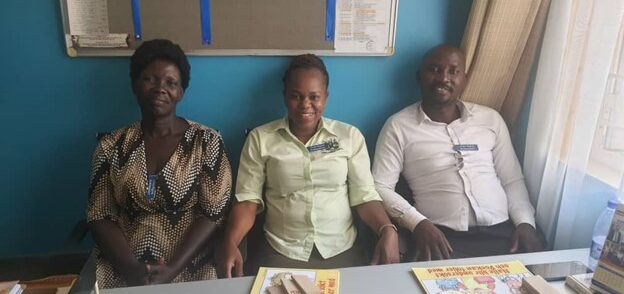
Training staff to become Child Rights Ambassadors is a practical and effective way to strengthen the protection of children’s rights. Through the ICLD partnership between Jinja City and Region Stockholm/Astrid Lindgren Children’s Hospital, a concrete tool has been developed: the Child Rights Ambassador Toolbox. It is a step-by-step guide for training people to become ambassadors for children and their rights.
With the help of this toolbox, Jinja has already trained around 80 Child Rights Ambassadors. Here you will meet two of them:
Wananda Irene – the Medical Social Worker transforming the hospital from within
Wananda Irene works as a Medical Social Worker at Kamuli General Hospital. For more than ten years, she has met children in settings ranging from emergency care and neonatal units to paediatrics and physiotherapy – yet she explains that children were rarely allowed to participate in decisions about their own care. Decisions were made by staff, explained to parents, and the children’s perspectives were left in the shadows.
This is what motivated her to train as a Child Rights Ambassador. She wanted to learn more, but above all to change how children are treated in healthcare. Through the training, she gained knowledge on children’s rights, the importance of play, developmental psychology, and how to listen to children’s own voices. She also took part in practical sessions where hospital staff interviewed and documented children’s experiences.

With the help of the training, Irene Wananda began transforming the hospital environment:
- She ensured that children’s rights were visible in corridors and waiting rooms through posters and information.
- She provided play materials for children’s wards, allowing play to happen alongside medical treatment.
- She pushed for the hospital to become more child-friendly – a goal now included in the hospital’s official work plan.
After a study visit to Sweden and Astrid Lindgren Children’s Hospital, she became even more inspired. She is now working to train more Child Rights Ambassadors. Her vision extends beyond the hospital walls – she hopes to reach schools, religious institutions, and local communities.
“I want children to be visible, heard and counted in healthcare. We are only getting started.”
— Wananda Irene
Otai Albert Julius – the psychiatric nurse letting children’s voices guide change
At the same hospital, Otai Albert Julius works as a psychiatric nurse. Every day he meets children and young people living with mental health challenges, and he saw how many carried both silence and fear. For him, the training became a tool to break those barriers.
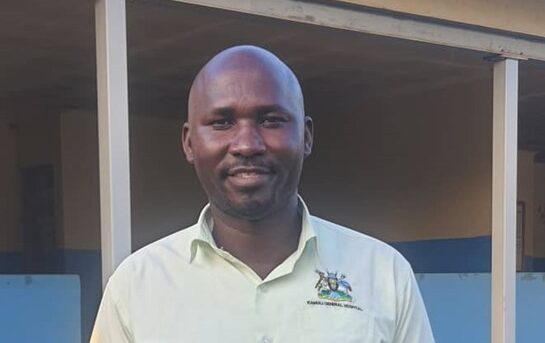
Otai decided to train as a Child Rights Ambassador after being inspired by a colleague who had already completed the course. When he saw the difference it made for the children in the paediatric ward, he wanted to be part of the change himself.
Through the training, he learned more about children’s rights, legislation, participation, and how mental health and rights are closely connected. He describes a particularly powerful moment: when children with chronic illnesses recited a poem and sang for the hospital leadership, asking for a dedicated ward for long-term illnesses and for greater understanding from staff. It was a reminder of why children need a voice.
As a Child Rights Ambassador, Otai now works to:
- spread knowledge to children, parents and schools
- help children put their experiences into words
- create safe ways to report abuse or neglect
- work with local leaders to change attitudes
- make healthcare less frightening for children
“Children should not fear healthcare. They should feel safe, listened to and respected.”
— Otai Albert Julius
From theory to practice
Wananda Irene and Otai Albert Julius are today two of more than 80 trained Child Rights Ambassadors in Jinja. They use the same toolbox, the same methodology, and share the same goal: turning children’s rights from theory into reality.
Their work has already led to several changes – including more child-friendly healthcare environments, more children seeking care and sharing their experiences, and increased knowledge and participation among children and their parents in decisions affecting them.
There is great interest in the new toolbox, and the hope is to spread it to hospitals and other institutions so that children’s rights become a natural part of everyday practice.