

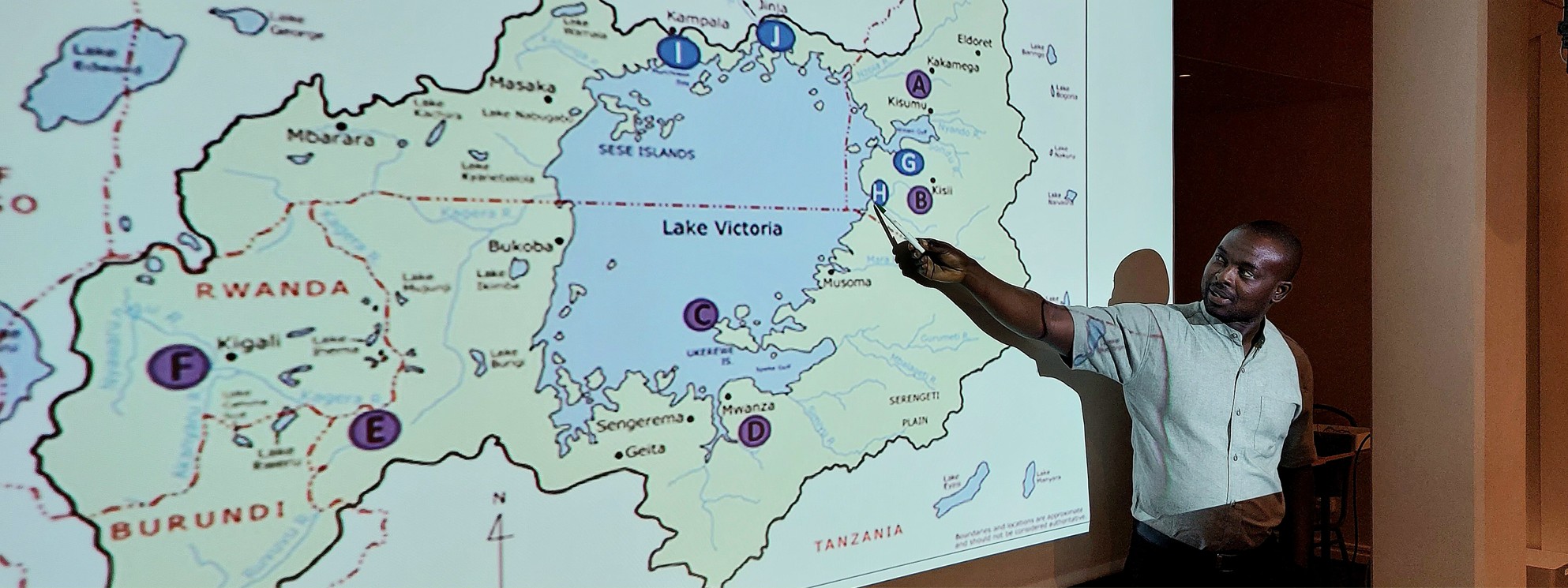
The ICLD partnership between Homa Bay County and Region Västerbotten has been a driving force behind the development of a Memorandum of Understanding (MoU) on partnership and governance for health and resilience in relation to climate and the environment in the Kenyan Lake Region. The MoU has been signed by Kisumu, Siaya, Homa Bay, Migori, and Busia counties, together with Region Västerbotten.
“This MoU symbolizes and demonstrates cross-county and cross-border ambitions—an important step in strengthening the link between local citizens’ needs and responsible institutions, and in identifying sustainable solutions to build more responsive and resilient local governments working with preventive health and climate change programmes,” says Johan Lilja, Secretary General at ICLD.
The collaboration stretches across continents and institutions – bringing together the health and environment departments around the shores of Lake Victoria in Kisumu, Siaya, Busia, Migori, and Homa Bay; Region Västerbotten and the City of Umeå; universities in Kenya and Sweden; the Stockholm Environment Institute; and UN agencies including the World Health Organization. Coordinating this mosaic of actors are Kisumu County’s Department of Health and Sweden’s Centre for Rural Health, a research and development unit within Region Västerbotten and a national hub for rural health research and innovation.
Building Resilient and Sustainable Health Systems Around Lake Victoria
The seeds of the initiative were planted several years ago. Since 2017, Region Västerbotten and Homa Bay County have worked together in an ICLD partnership to reduce health inequities – a partnership that came to include environmental and natural resource agencies, acknowledging that public health cannot be separated from a clean and functioning ecosystem.
Their work caught the attention of neighbouring counties. In 2021, representatives from Region Västerbotten met Kisumu’s governor, Professor Peter Anyang’ Nyong’o – a meeting that marked a turning point. When they met again during the Africities Summit in Kisumu in 2022, the governor voiced clear support: the region should build a joint alliance with Västerbotten and the Lake Victoria counties to strengthen health systems from the ground up.
What impressed him was the holistic approach – linking resilience not only to health services but also to the social, economic, and ecological forces shaping people’s lives. With his backing, interest quickly spread to the remaining counties around the lake. The Swedish municipality of Umeå was also invited in, bringing expertise from years of involvement in large international networks.
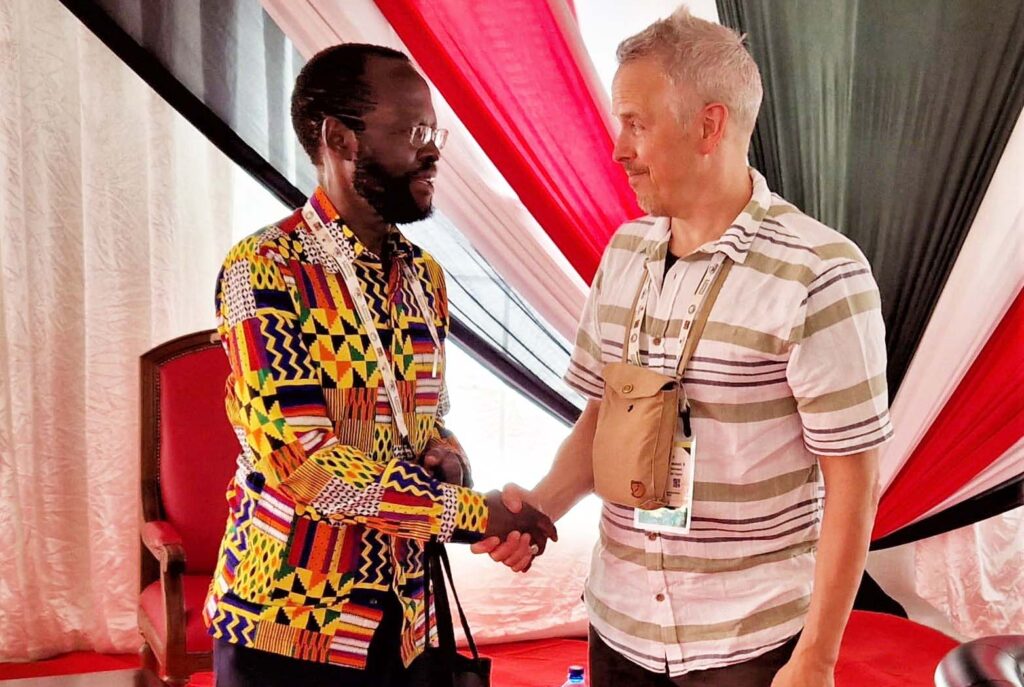
The project has focused heavily on bringing regional leaders and decision-makers together – often for the first time – to discuss how local authorities can build stronger, more sustainable health systems, and how cross-county collaboration is essential when challenges flow across borders.
The project mapped regional conditions, reviewed scientific literature, and analysed policies to ensure the agreement rested on solid ground. International organisations provided additional expertise and networks, giving the partnership global reach while keeping its roots firmly local.
At the heart of the initiative lies a simple principle: sustainable development and health equity can’t be delivered from the top down. They must grow from local democracy, participation, and cooperation.
A Shared Agreement and a Shared Understanding
The most tangible result so far is the agreement itself – but what makes it meaningful is the process behind it. Through dialogue, workshops, and joint analysis, the partners developed a deeper understanding of each other’s realities and of the frameworks – many shaped by WHO and global research – that can guide their future work.
The result is not just a signed document but a strengthened ability to engage communities, respond to climate and environmental challenges, and make decisions that reinforce democratic values. The democratic dimension is not just mentioned – it is woven into the agreement’s foundations.
What Comes Next
The next chapter will focus on research. The counties and their academic partners have already drafted a joint research concept that will guide upcoming funding proposals – placing citizen participation at the centre.
Another step will be to bring the agreement into the Lake Victoria Economic Bloc, a regional platform that includes far more counties and even neighbouring countries. The hope is that the partnership can inspire a broader movement around the lake.