

The Citizen Report Card (CRC) survey in Maicao, Colombia, was conducted to assess local democracy and LGBTIQ+ liason office’s services. The survey is part of ICLD’s Municipal Partnership Programme (MPP), which partners Maicao with Upplands-Bro in Sweden to strengthen the rights of LGBTIQ+ individuals. Through this survey, citizens in Maicao have the opportunity to provide feedback on their experiences with local governance and public services.
Survey Process
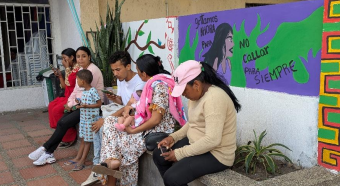
The survey was conducted among 477 inhabitants of the Municipality of Maicao who attended the Centre for Social Services between December 15 and December 19, 2025. The survey measured key areas of local democracy—participation, transparency, accountability, and equity—along with questions related to the LGBTIQ+ Liason Office of the Municipality of Maicao.
Demographic Profile of Respondents
59% of respondents were female and 40% were male.
54% of respondents were part of an Indigenous group.
43% of respondents had someone with a disability in the household.
27% of the respondents were unemployed.
22% of respondents lived in rural areas and the majority lived in city areas.
Key Findings
1. Participation in Local Democracy
- The Participation Index showed an average score of 0.32, with people below 26 years old and those unemployed participating less in local democracy.
- On the other hand, people living with someone with a disability seemed to be more involved in the local democracy in Maicao.
2. Transparency, Equity and Accountability
- The Transparency Index had an average score of 0.73, showing a negative relation with the variable rural, town and unemployment, meaning these people know less about what the local government is doing.
- The Equity Index showed an average score of 0.93, showing unemployed people to be most likely to answer yes to: “in the last three years, have you been unfairly denied a service by the local government?”
- The Accountability Index had an average score of 0.63, including unemployed respondents having lower knowledge of official complaint and don’t think it’s a useful way to influence the local government. However, respondents living with someone with a disability exhibited the opposite pattern.
3. LGBTIQ+ Liason Office
- The Service Delivery Index about the LGBTIQ+ liason office’s services had an average score of 0.8, with respondents with a higher score on accountability index being slightly more satisfied with the service delivery.
- Respondents living in town areas are less satisfied with the service delivery.
- The index shows an overall high level of satisfaction.
Key Takeaways and Recommendations
- Improving Visibility and Public Awareness: The local government should improve communication by promoting the LGBTIQ+ liaison office more, adding clear signs, and sharing more information so that people know it exists and can easily access its services.
- Strengthening Programs and Social Initiatives: The local government should expand programmes and projects by creating more community activities, offering employment and technical training opportunities, providing humanitarian support, and increasing social action initiatives for the LGBTIQ+ population.
- Structural and Resource Investments: Government should improve the office’s facilities by providing better furniture, updated technology, and adequate space, while also giving more support and resources to help the office work better and expand its services.
The Citizen Report Card provides the local government of Maicao with valuable insights to help enhance local democracy, improve LGBTIQ+ community inclusion, and address the needs of marginalized groups in the community.