


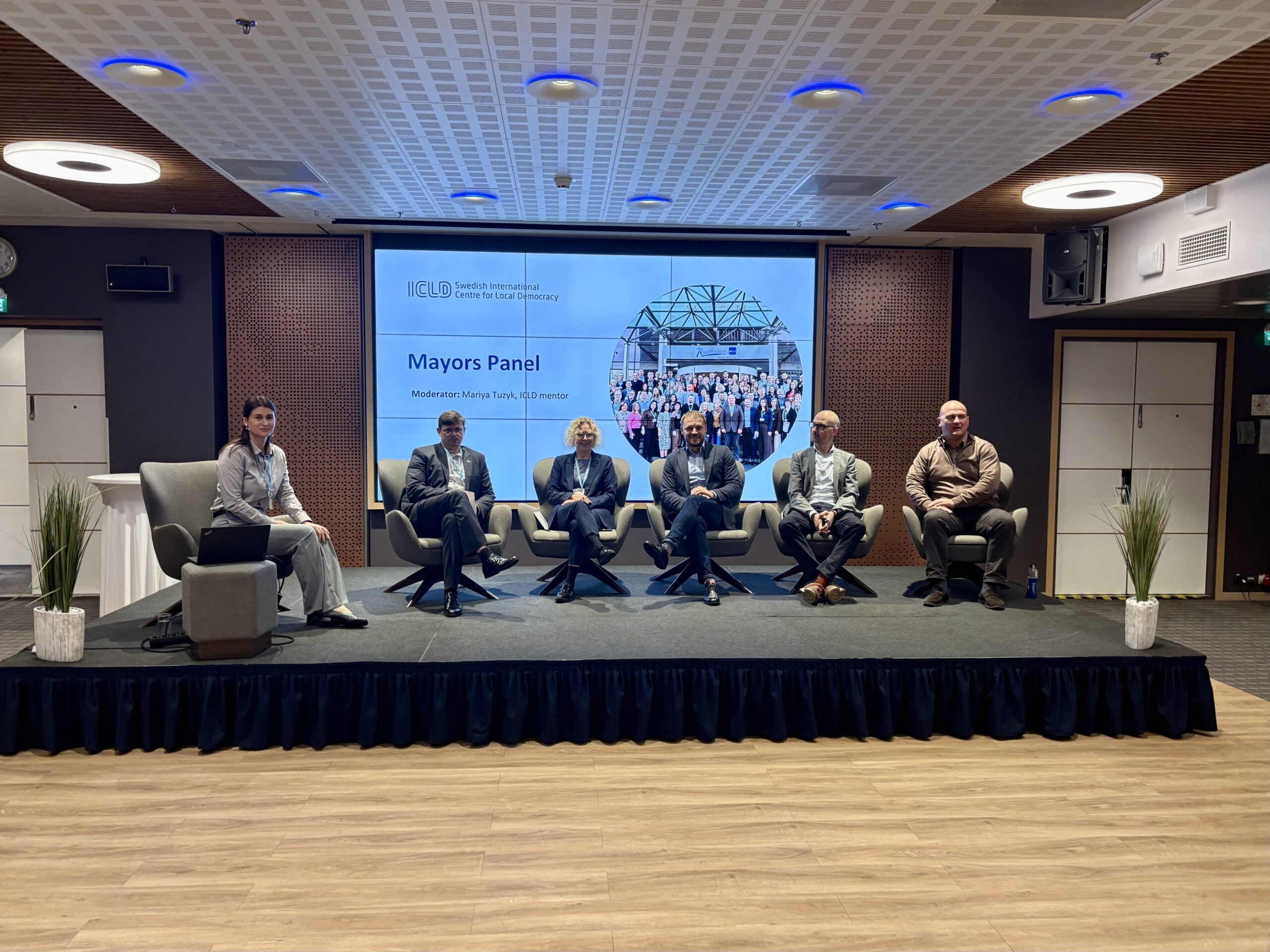
At the ICLD Network meeting held in Tallinn this November, mayors and political leaders from both Ukraine and Sweden gathered to reflect on the future of their municipal partnerships. The discussion centred on how cooperation can become more resilient and sustainable, extending beyond individual projects, key people, and political cycles.
The speakers shared a series of practical insights on what is needed to ensure long-term, effective collaboration:
- The importance of structured and continuous communication, maintaining dialogue even between physical meetings.
- The need to systematically explore opportunities for funding, learning, and exchange that can support further development.
- The value of joint planning, including agreeing on next steps and setting shared milestones.
- The impact of visits to partner municipalities in Ukraine, where understanding the local context firsthand strengthens relationships and deepens cooperation.
- The benefits of broadening participation, ensuring that civil servants, elected officials, and community members from both sides are involved to create ownership and long-term impact.
- The recognition that digital tools are helpful additions to cooperation, but cannot replace face-to-face interaction.
A key take-away from the network meeting was according to the panelists the importance of trust-building and to actively involve citizens in decision-making in order to strengthen civil defense and preparedness.
“Regardless how we want to improve our municipality, we need citizen dialogue.” said Janet Ågren from Umeå who collaborates with Kherson. The week in Tallinn gave valuable insights into how to use e-governance for trust-building and the panelists stressed the importance of intermunicipal cooperation.
Across the discussion, one message stood out clearly: strong partnerships are built not only through well-designed projects, but through trust, inclusion, and continuous dialogue. Even amid the challenges of war and uncertainty, Swedish–Ukrainian municipal cooperation is developing into long-lasting relationships that contribute to real, local change.
The session underscored a shared commitment to keep strengthening these partnerships—laying the groundwork for sustainable development and democratic resilience in the years ahead.
Looking ahead the panelists stressed the importance of finding new areas for collaboration, to spread their results and learn from each other and to collaborate cross-departmentally within the municipality. Last but not least, to work intercommunal has led to a broader and more practical understanding for EU-principles in the Ukrainian communities and is therefore an important cornerstone of Ukraine’s EU-accession process.
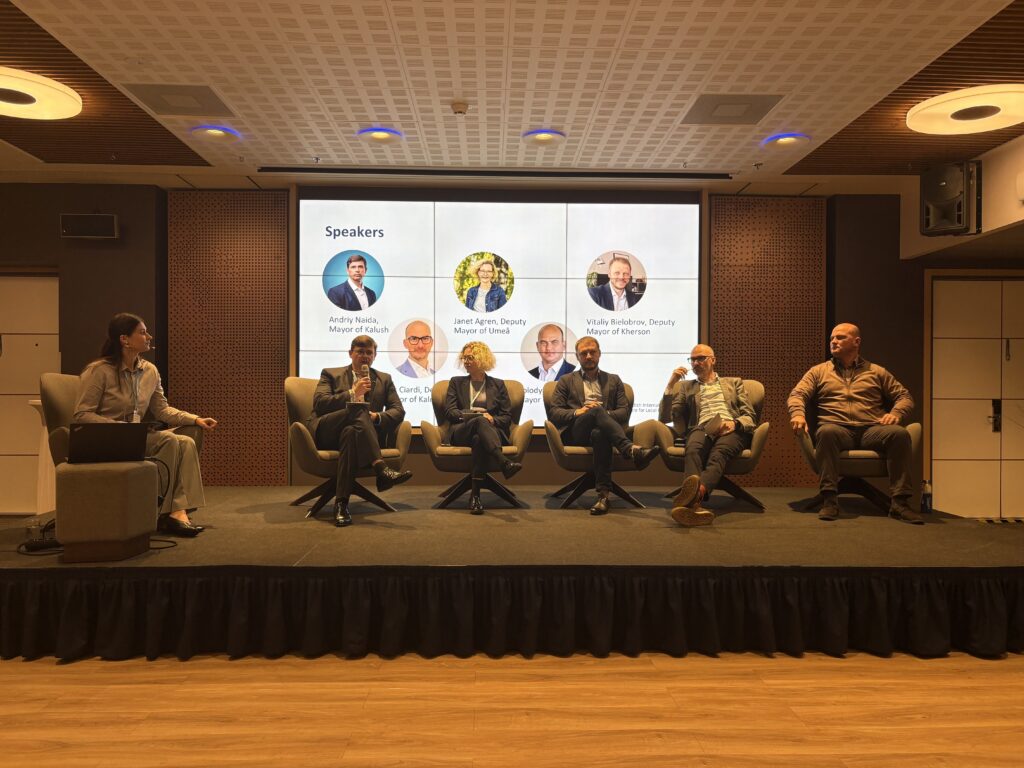
Panelists:
- Andrii Naida (Kalush, Ukraine)
- Janet Ågren (Umeå, Sweden)
- Vitalii Bielobrov (Cherson, Ukraine)
- Erik Ciardi (Kalmar, Sweden)
- Volodymyr Shmatko (Chortkiv, Ukraine)
- Moderator: Mariya Tuzyk, ICLD mentor