

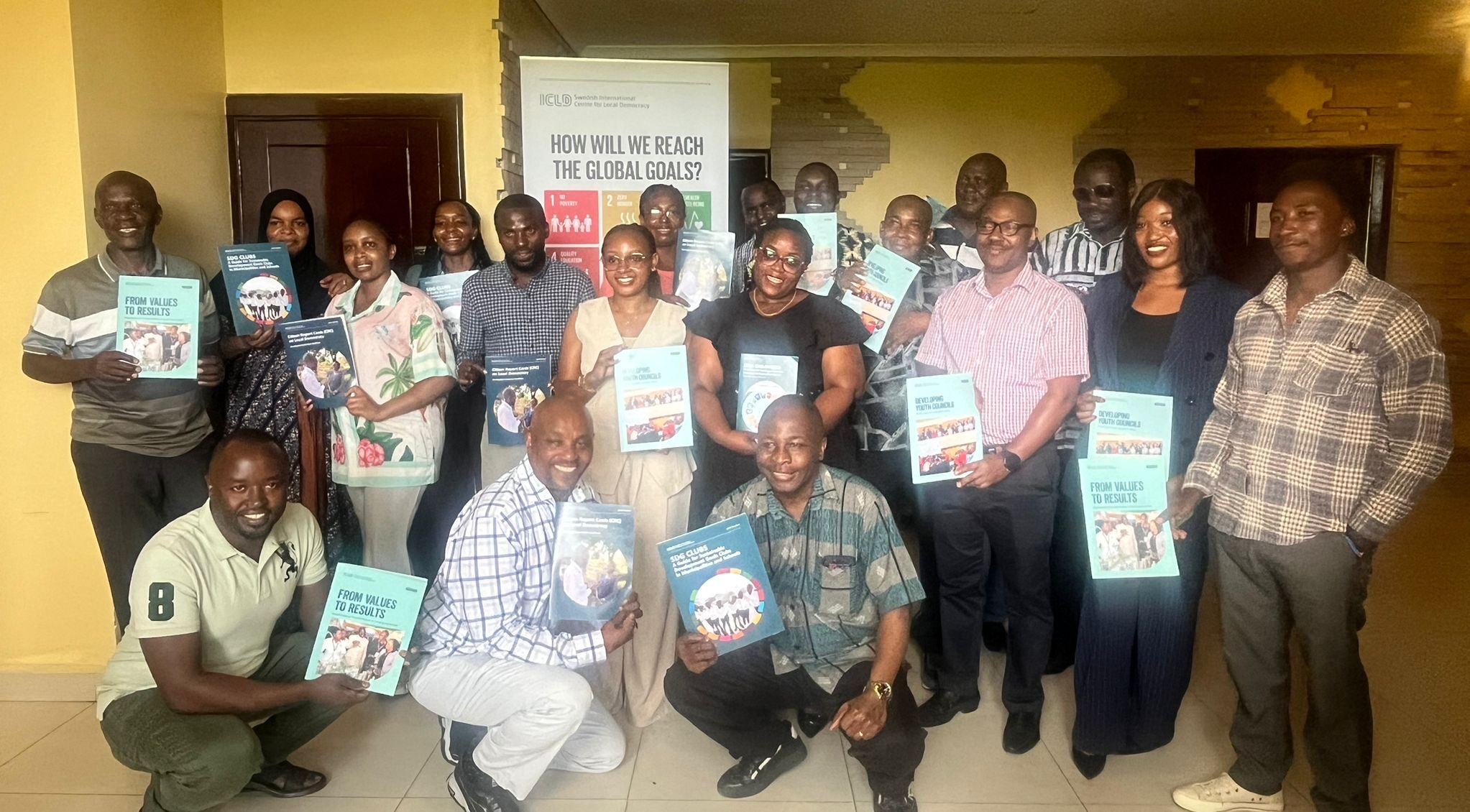
In March 2026, ICLD conducted a three-day Training of Trainers (ToT) in Dar es Salaam, bringing together 20 representatives from local government associations and training institutions in Uganda, Kenya, and Tanzania.
These organisations play a central intermediary role in local governance systems. They design and deliver capacity-building programmes, support policy implementation, and work directly with municipalities, councillors, and administrative staff. The training was therefore designed to strengthen their ability to integrate and disseminate democratic governance tools within their existing structures and networks.
The ToT forms part of ICLD’s broader approach to supporting partner institutions in taking ownership of its tools and methods. Participants were selected based on their experience in training delivery and their potential to cascade learning to local governments.
ICLD Tools for democratic governance in focus
Over three days, the programme moved from core values of participation, equity, transparency, and accountability, to how these are applied in practice, and finally to how participants can train others in their use. The group worked with the following set of ICLD tools:
- Stakeholder Engagement Guide
- Youth Councils
- SDG Clubs
- Citizens’ Budget
- From Values to Results
- Our Childhood
- Safety Audit for Inclusive Transport
- Citizen Report Cards
All ICLD toolboxes are found via this link.
Through case-based discussions, simulations, and group work, participants explored how the tools can be adapted to different institutional and local contexts. Across the tools, a common approach was identified: an emphasis on inclusive, bottom-up processes and the practical application of democratic values. While direct replication is not always feasible, participants discussed how the underlying principles can be integrated into existing programmes and ways of working.
Strengthening facilitation skills
The training also focused on strengthening participants in their role as facilitators. Sessions on adult learning addressed how to manage group dynamics, support inclusive participation, and navigate sensitive or complex discussions. This was combined with practical work on designing dissemination plans, where participants identified target groups, entry points, and strategies for implementation within their organisations and networks.
Action plans to cascade the tools and principles
By the end of the training, participants had developed concrete plans for how to introduce and apply the tools in their respective contexts. While approaches differed depending on institutional roles and mandates, several common directions emerged. These included integrating the tools into existing training programmes and curricula, adapting materials to local contexts, and working through established platforms such as associations, training institutes, and partnerships with municipalities.
Some organisations emphasised internal processes, such as training colleagues, embedding the tools in institutional policies, or aligning them with ongoing programmes. Others focused on phased approaches, starting with pilot activities and expanding based on lessons learned. Several participants highlighted the importance of collaboration, including working with government bodies, civil society organisations, and existing networks to support wider dissemination.
Inclusivity in focus
There was also a strong focus on inclusion in the planned work. Participants identified opportunities to strengthen engagement with youth, children, and other groups that are often underrepresented in local decision-making, as well as to apply gender perspectives more systematically in governance processes.
Taken together, the plans reflect different entry points and strategies, but a shared intention to make the tools part of ongoing work rather than standalone initiatives. The ToT thus paved the way for continued adaptation, collaboration, and application of democratic governance approaches across the participating organisations and the local governments they support.
The training is part of a series of activities within ICLD’s alumni network, focused on the dissemination and institutionalisation of local democratic results. This includes a webinar on institutionalisation after completed project support, one Training of Trainers in Eastern Africa and one in Southern Africa, as well as a dissemination grant to local government associations in further conveying ICLD tools.