
South Africa

Karlskrona and Saldanha Bay, South Africa
Karlskrona and Saldanha Bay Municipality will together adress the problem of Limited capacity to include youth in decision-making processes. Particularily when it comes to climate adaption issues since these may disproportionately impact youth. The objectives in Saldanha bay are focused around inclusion of underrepresented groups, as well as political committment on this issue: The partners…

Växjö and JB Marks, South Africa
Projekt: Efficient and Responsive Traffic Planning The new project focuses on the promotion of road safety by increasing the mobility for children, minorities, underrepresented groups, and the socety as a whole. The project streaches over three years and is based on the SDG no 11. Sustainable cities and communities. The aim with the…

Towards Inclusive WASH Policy-Making: A case study of exploring barriers to adopting gender responsive budgeting (GRB) in the water and sanitation sector in Cape Town
This study investigates different potential barriers to adopting a Gender Responsive Budgeting (GRB) approach that aims to address gender inequalities in the WASH sector. The study explores the perspectives of civil servants, local politicians, and civil society representatives through semi-structured interviews, shedding light on the challenges faced in intensifying gender equality perspectives at the local…

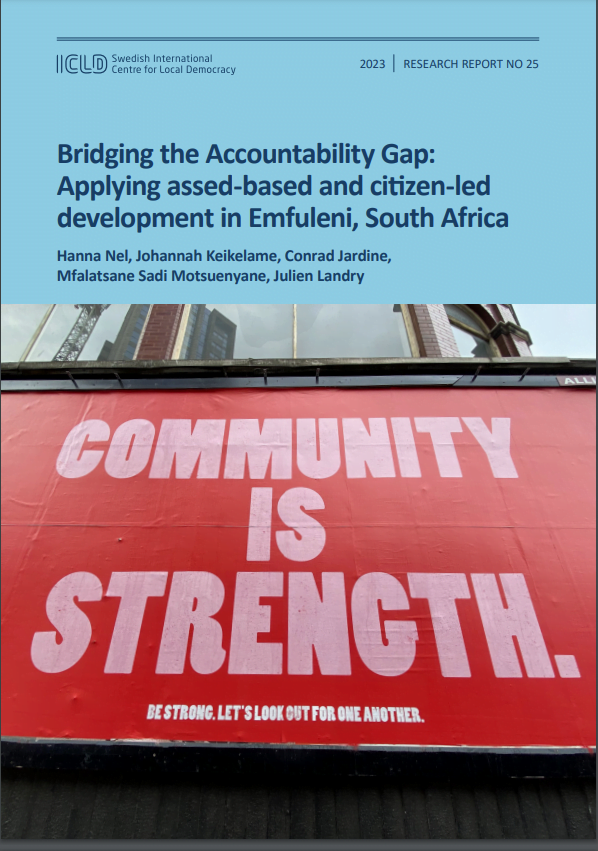
Bridging the Accountability Gap: Applying assed-based and citizen-led development in Emfuleni, South Africa
This research project aims to gain an understanding of how to institutionalise the Asset-Based and Citizen-Led Development (ABCD) approach as an innovative means of promoting active citizen engagement along with local-level social accountability in Emfuleni Local Municipality, Gauteng Province in South Africa. Building on Cooperative Governance and Traditional Affairs (CoGTA)’s work in three wards of…

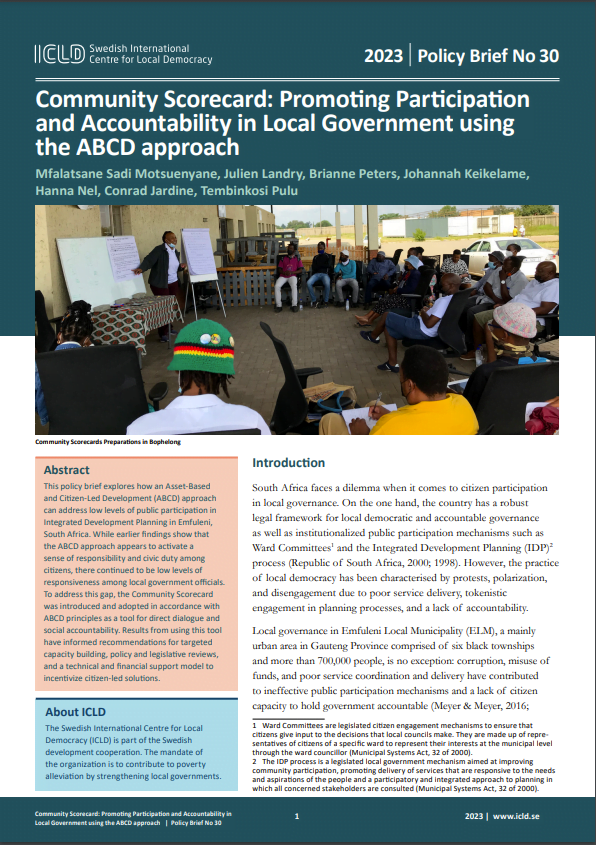
Community Scorecard: Promoting Participation and Accountability in Local Government using the ABCD approach
This policy brief explores how an Asset-Based and Citizen-Led Development (ABCD) approach can address low levels of public participation in Integrated Development Planning in Emfuleni, South Africa. While earlier findings show that the ABCD approach appears to activate a sense of responsibility and civic duty among citizens, there continued to be low levels of responsiveness…

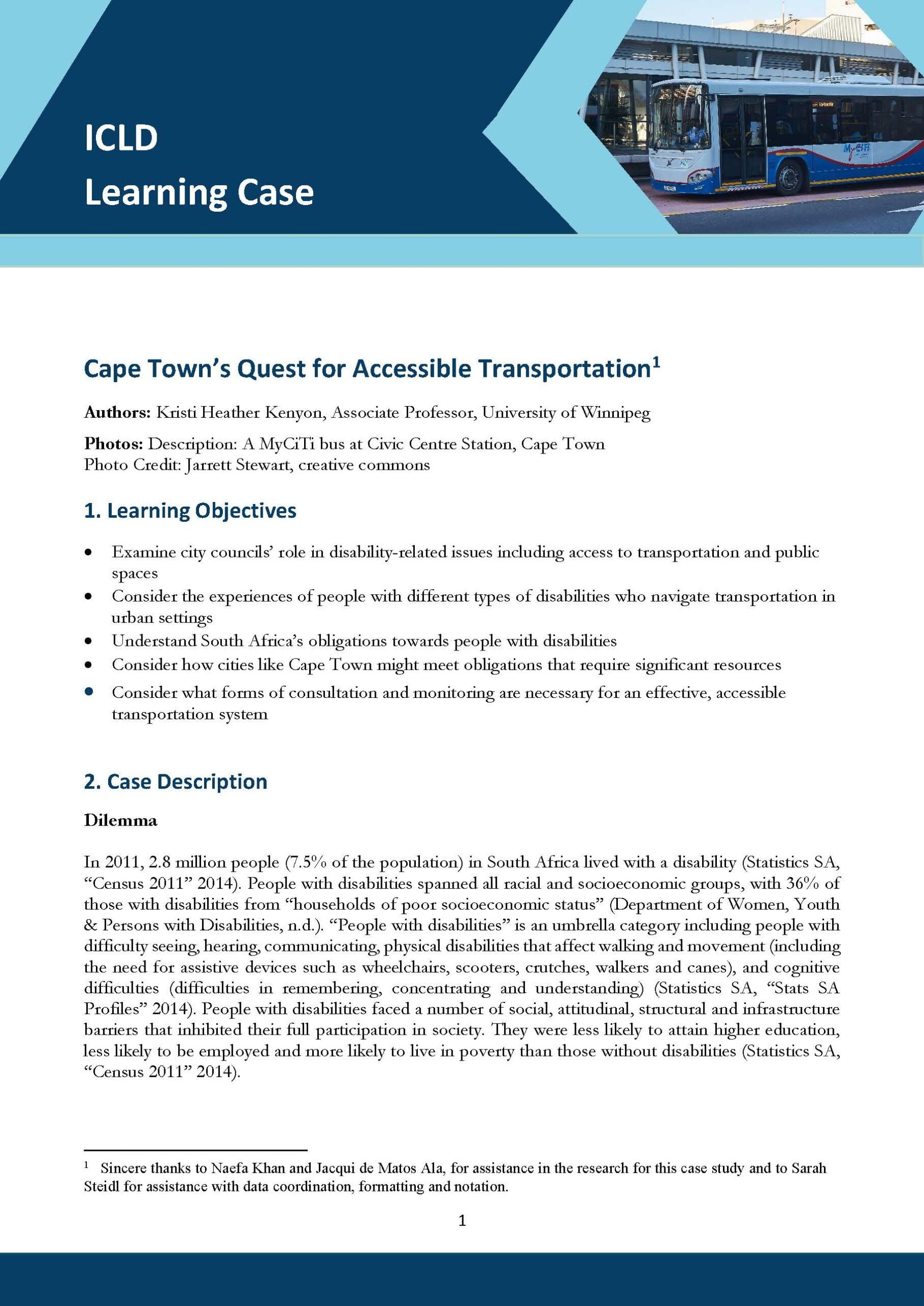
Cape Town’s Quest for Accessible Transportation
Key concepts: Spatial Inequality, Social Inclusion, Disability Rights As in many countries in the world, people with disabilities in South Africa face a number of social, attitudinal, structural and infrastructure barriers that inhibit their full participation in society. Accessible transportation can be one way to overcome some of these barriers and allow for access to…

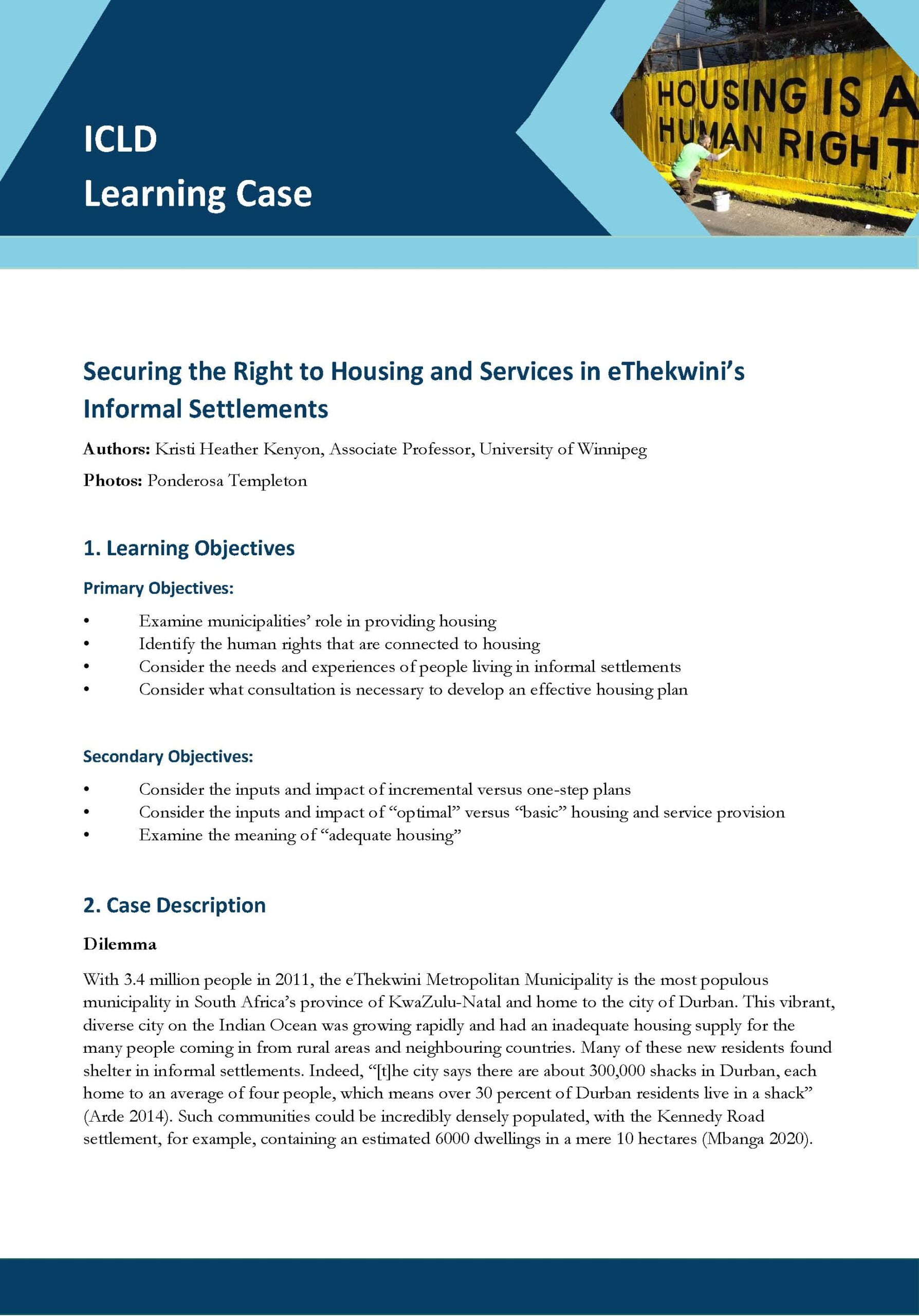
Securing the Right to Housing and Services in eThekwini’s Informal Settlements
Key Concepts: Spatial Inequality, Right to Housing Like other major cities in South Africa, Durban’s eThekwini Metropolitan Municipality faces a growing population fuelled by migration from both rural areas and neighbouring countries. Many new residents find shelter in informal settlements which are, although real communities, often overcrowded and unsafe, lacking critical infrastructure. The municipality’s Human…

Falkenberg, Sundays river valley och Sarah Baartman district – South Africa
Building bridges The partners state that children and youth exclusion often is perpetuated by poverty and inequality, which limit access to resources and opportunities for young people to improve their social mobility and economic prospects. For the South African partners the objectives are to gain capability to: No interventions or activities for youth shall be…
Ekerö och Cape Agulhas, Sydafrika
Inclusion through developing dialogue and cooperation between civil society and the municipality The aim of the project is to investigate how to develop dialogue and cooperation between civil society (non-governmental organisations or networks and citizens) and the respective municipalities. A focus area for the cooperation will be identified, such as developing methods for citizen dialogue,…
Programme structure
Inclusive Local Governance The training consists of four compulsory workshops, of which all four are full time scheduled trainings. Periods between workshops are homebased. The total duration of the programme is 18 months. When:The inception workshop will be held during week 10, March, 2022 in Johannesburg, South Africa.The Sweden Phase workshop will take place during…