5 – Gender equality

Recognize to Transform
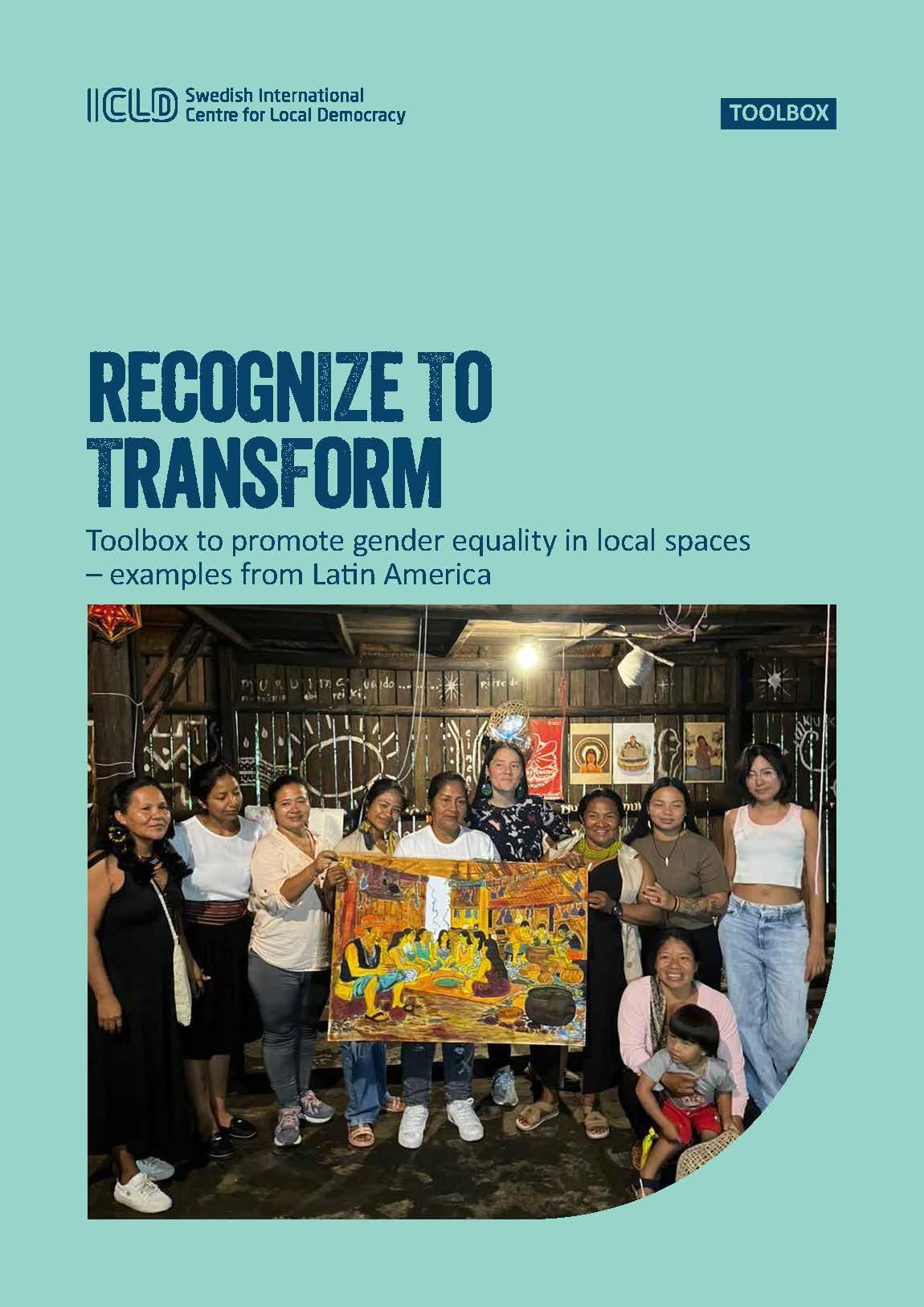
Toolbox to promote gender equality in local spaces – examples from Latin America Recognize to Transform is an invitation to look at local democracy through the experiences and voices of women. This toolbox offers ideas, experiences and practical tools to recognize gender inequalities, strengthen women’s political and community participation, and expand their influence in local…

Women Leading Democratic Change
Impact, Results and Lessons from ICLD’s programme Women’s Political Leadership This anthology brings together reflections, lessons, and stories from women politicians who have sought to create change in their communities. While political leadership is often described through policies, institutions, and election results, less attention is given to its everyday realities: building trust, navigating resistance, forging…

Taking the word
Indigenous Women’s Struggle for Equality in Colombia and Guatemala This roadmap provides a strategic framework for the local governments of Leticia and Panajachel to bridge the gap between legal commitments and the meaningful political influence of Indigenous women. Although current regulatory frameworks for women’s participation in Colombia and Guatemala have strengthened formal mechanisms and created…

Weaving the spoken word through sentipensar
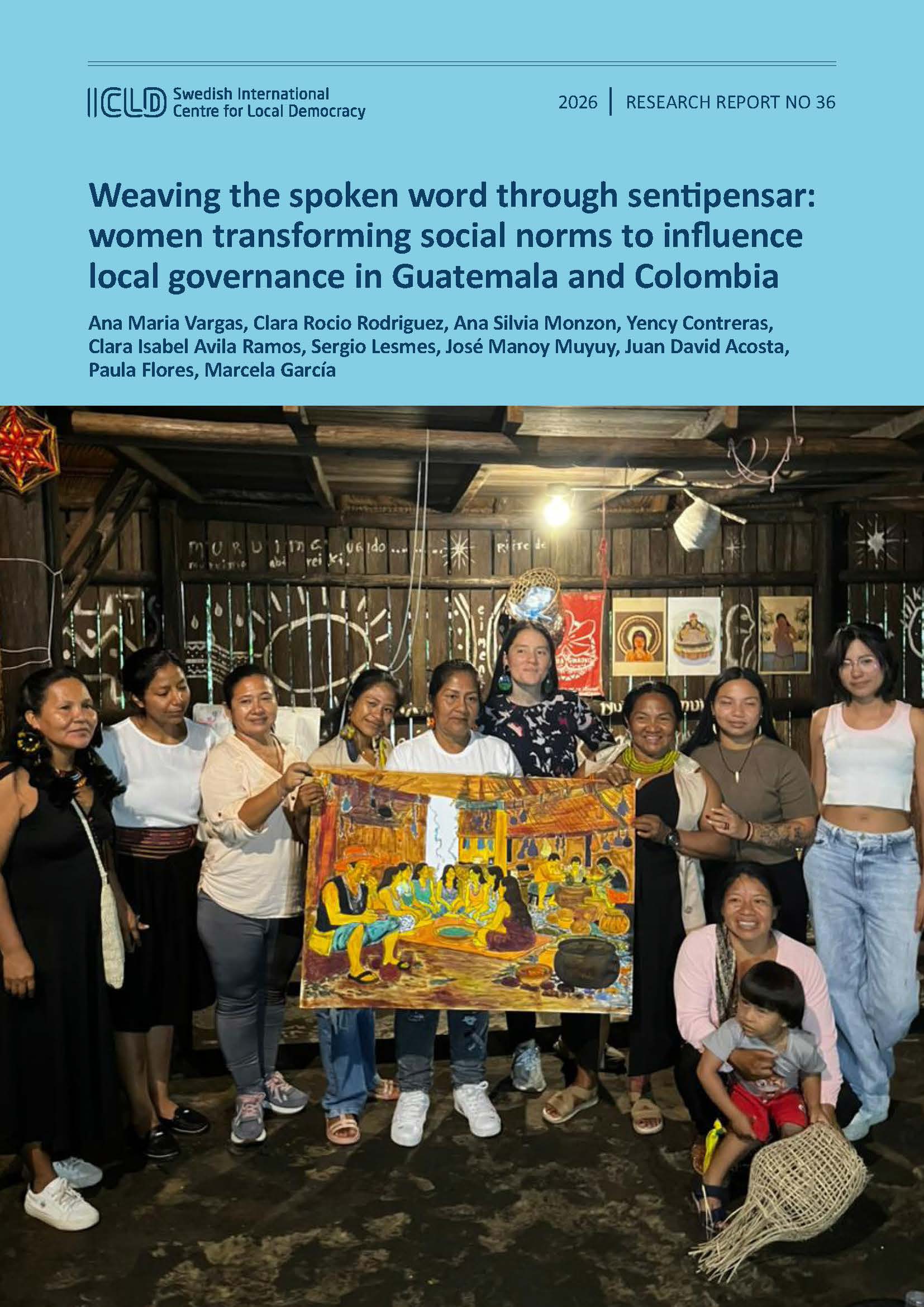
Women transforming social norms to influencelocal governance in Guatemala and Colombia Across Latin America, important legal and policy advances have sought to expand women’s participation in public life. Yet in many local contexts, these formal gains have not translated into meaningful influence. This study explores this gap by asking: how do social norms shape women’s…
Participation is not enough
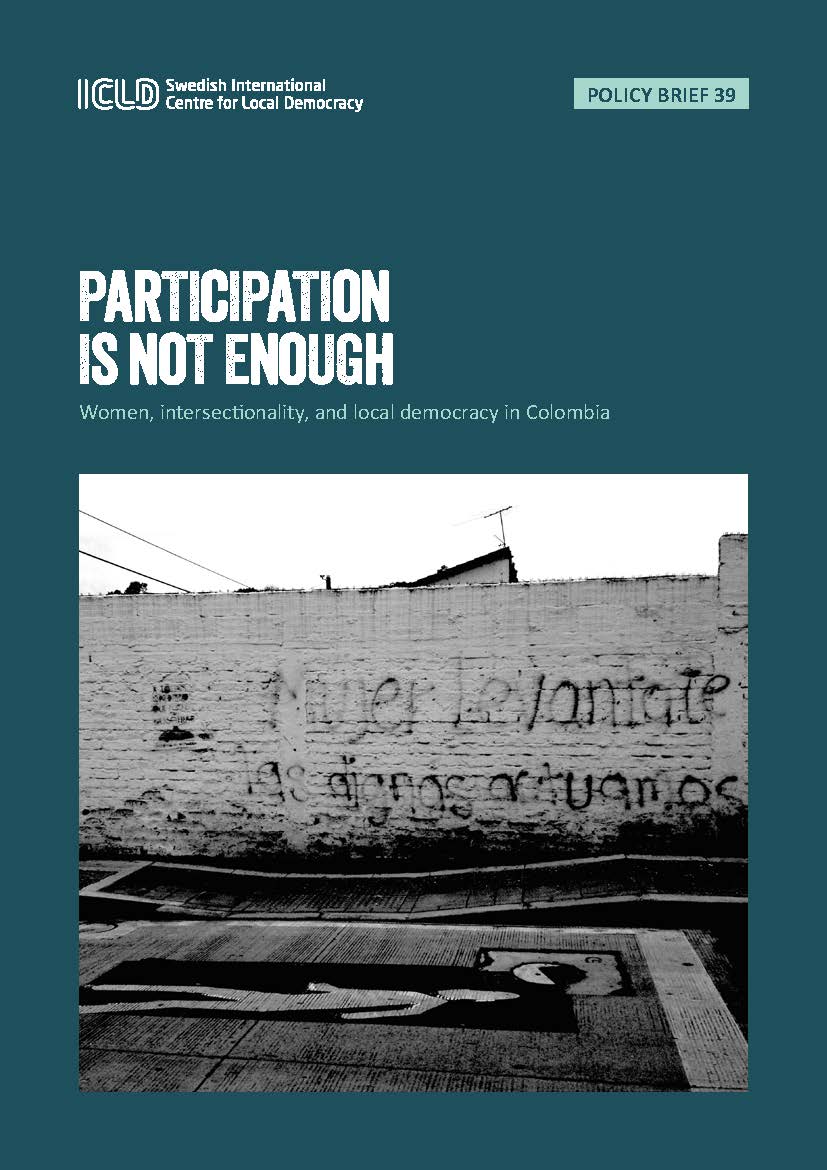
Women, intersectionality, and local democracy in Colombia In Colombia, participatory mechanisms have opened spaces for women, but these spaces have not enabled their political agency as expected. Often, these mechanisms have focused on “women” generically, reproducing discrimination based on gender, ethnicity, and class. Drawing on a case study of the Women’s Advisory Council (WAC) of…

New Kenya–Sweden Partnerships Approved by ICLD
Two new applications for democratic partnerships have recently been approved through ICLD. The municipalities of Norrköping and Arvika will now have the opportunity, together with their Kenyan partner municipalities, to build on their experiences from previous ICLD projects. Norrköping is collaborating with the municipalities of Embu and Homa Bay County, while Arvika is working with…

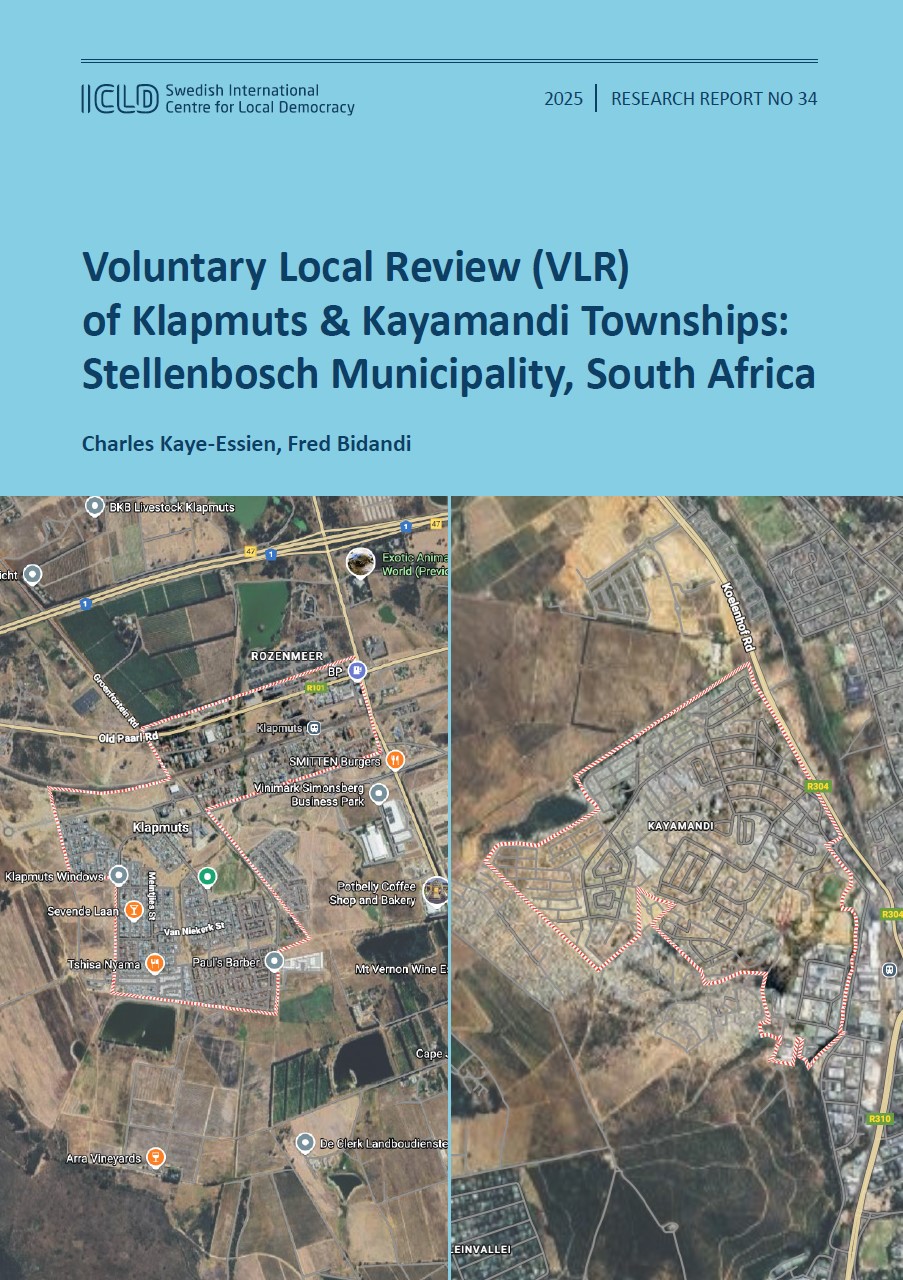
Voluntary Local Review (VLR) of Klapmuts & Kayamandi Townships: Stellenbosch Municipality, South Africa
This report responds to the growing need for voluntary local reviews (VLRs) of Sustainable Development Goal (SDG) progress at the municipal level. It presents the findings of a community-based assessment conducted in the informal townships of Klapmuts and Kayamandi, both located within the Stellenbosch Municipality of the Western Cape Province, South Africa. In line with…

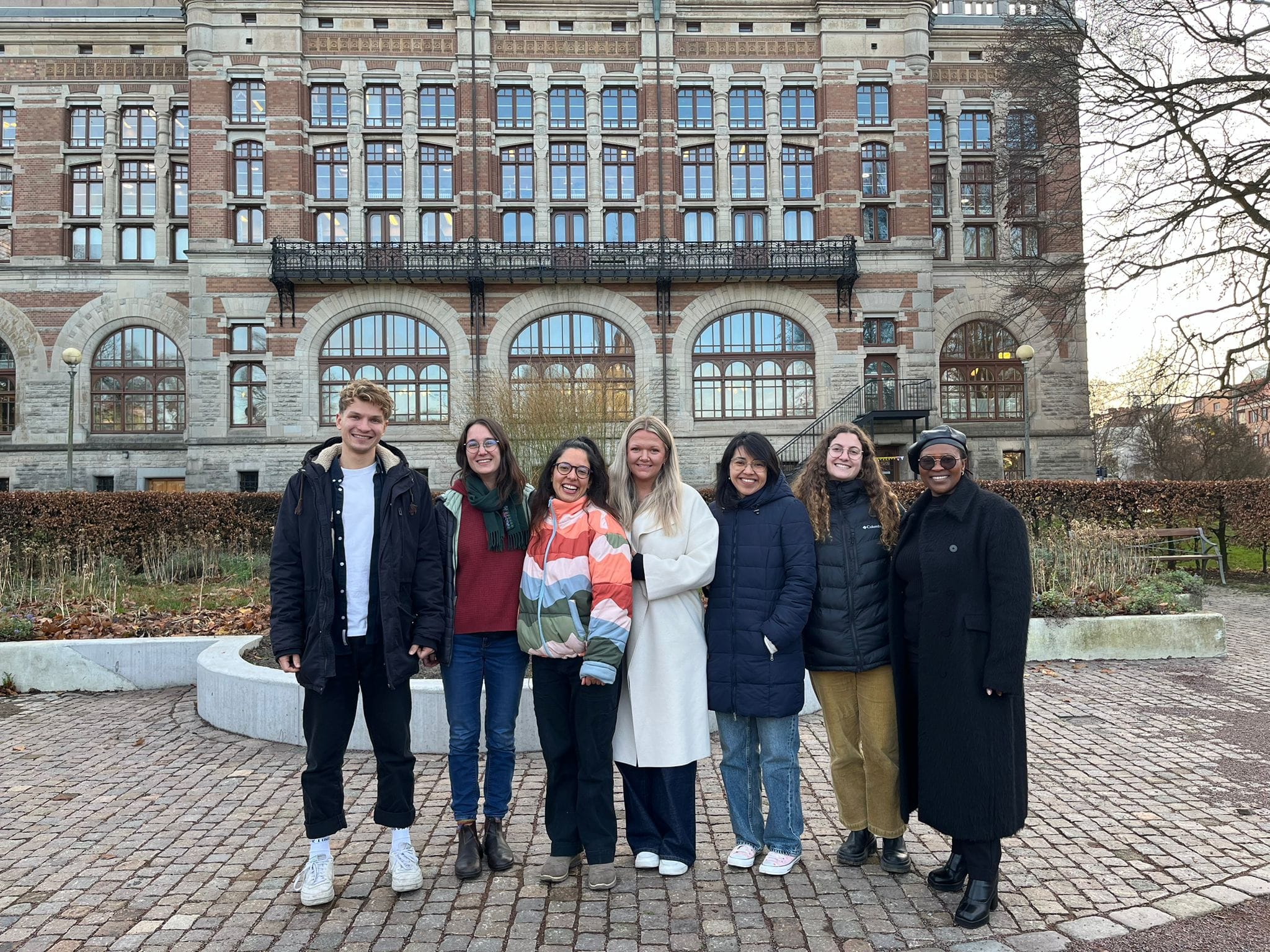
Women, indigenous knowledge and climate resilience in focus amongst our Fieldwork Grant recipients
We are happy to share our most recent group of Fieldwork Grant participants here at ICLD! This year, 9 brilliant students presented their research on highly topical subjects for both our organization, the general state of the world and local democracy. Each of them had a unique perspective on pressing issues globally, and the execution…

From Seeds to Assemblies. Agroecology as a Tool for Political Participation
Indigenous women’s political participation remains limited due to intersecting inequalities. Nevertheless, sustainable initiatives such as agroecology have proved to empower communities and promote social engagement. This research investigates the political dimension of agroecology by examining how it can affect Indigenous women’s political participation. Social Capital Theory and Empowerment Theory are used to identify the mechanisms…
Living Knowledge in a Changing Land
Indigenous communities in the Amazon are facing rapid socio-ecological changes that threaten traditional land management practices and food sovereignty. Indigenous knowledge and practices, essential for biodiversity conservation, are quickly being lost. I examine how changes in traditional land management affect Indigenous food sovereignty and its impact on the growth of women’s leadership in Mitú, Colombia.…