Inclusive leadership and governance

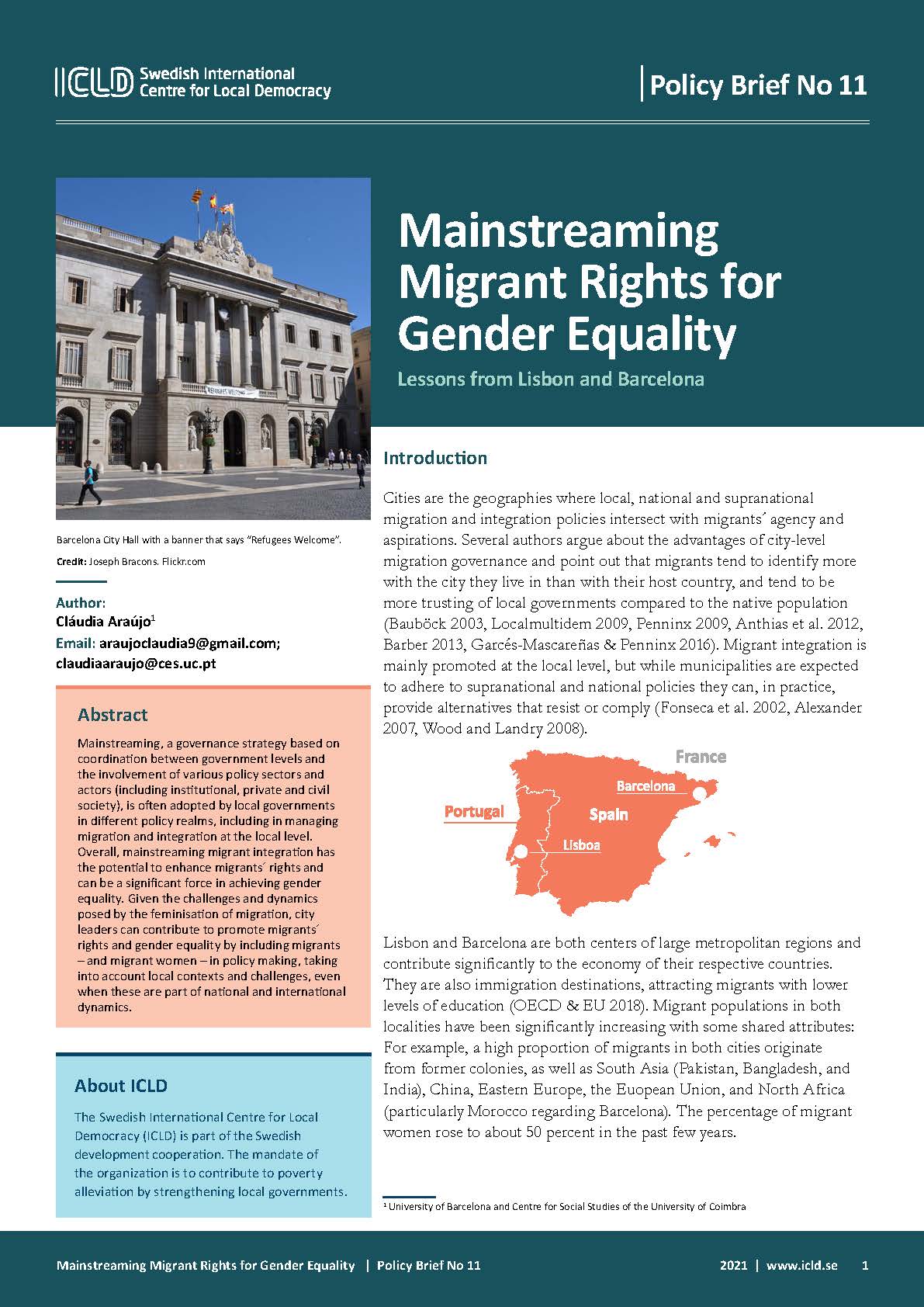
Mainstreaming Migrant Rights for Gender Equality: Lessons from Lisbon and Barcelona
Mainstreaming, a governance strategy based on coordination between government levels and the involvement of various policy sectors and actors (including institutional, private and civil society), is often adopted by local governments in different policy realms, including in managing migration and integration at the local level. Overall, mainstreaming migrant integration has the potential to enhance migrants´…

Checklist for dialogue with children and young people
This checklist is intended to facilitate the dialogue process between civil servants and children and young people. The checklist should preferably be used at an early stage in a process involving issues that affect children and young people, whether directly or indirectly. It can, for example, be used when drawing up new plans, budgets, projects,…
Admission requirements
Invited countries All countries on the OECD-DAC listed ODA-eligible countries, are eligible for the programme, but if a local election is held during the year when the training takes place, the country is temporarily taken off the list. This is also aplicable if the country is having av election between August and December the current…
Programme structure
The training consists of three compulsory workshops, of which all three are full time scheduled trainings. Periods between workshops are homebased. The total duration of the programme is 12 months. When will cohort 12 take place:The Inception workshop will be held in late January 2026The Swedish Phase workshop will most likely take place in May 2026The Final workshop will take place…
Programme objectives
The programme aims to provide the following changes in the participant: During the training, the participant will work on her change process and implement a strategy to make the local authority equitable, participatory, transparent and accountable. Benefits: What we will offer: How? Change process The participant is expected to develop and work with a change process of…
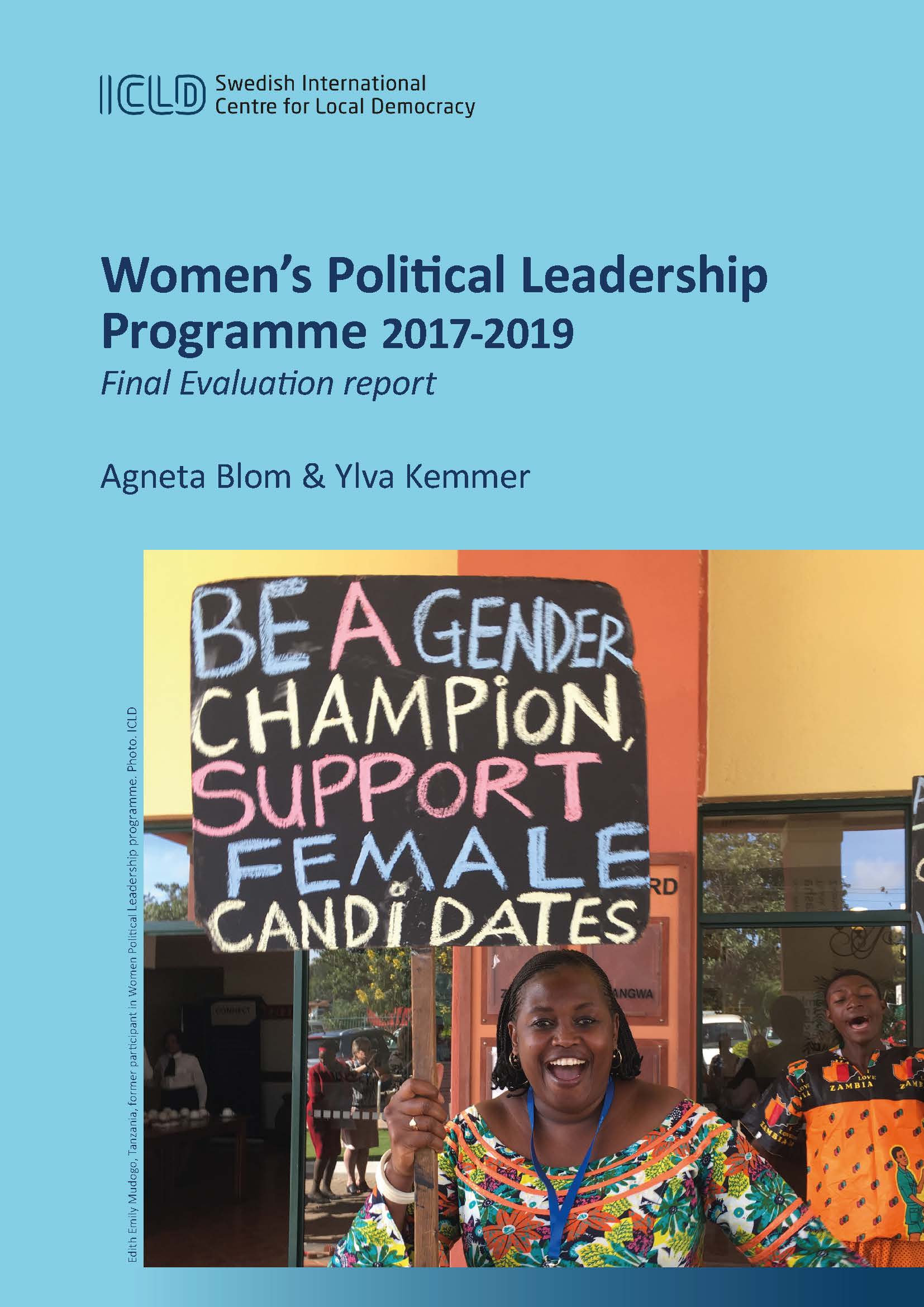
Women’s Political Leadership Programme – final evaluation report
Final evaluation report of ICLD international training programme Women’s Political Leadership 2017-2019 The purpose and objective of this evaluation has been: