
16 – Peace, justice and strong institutions

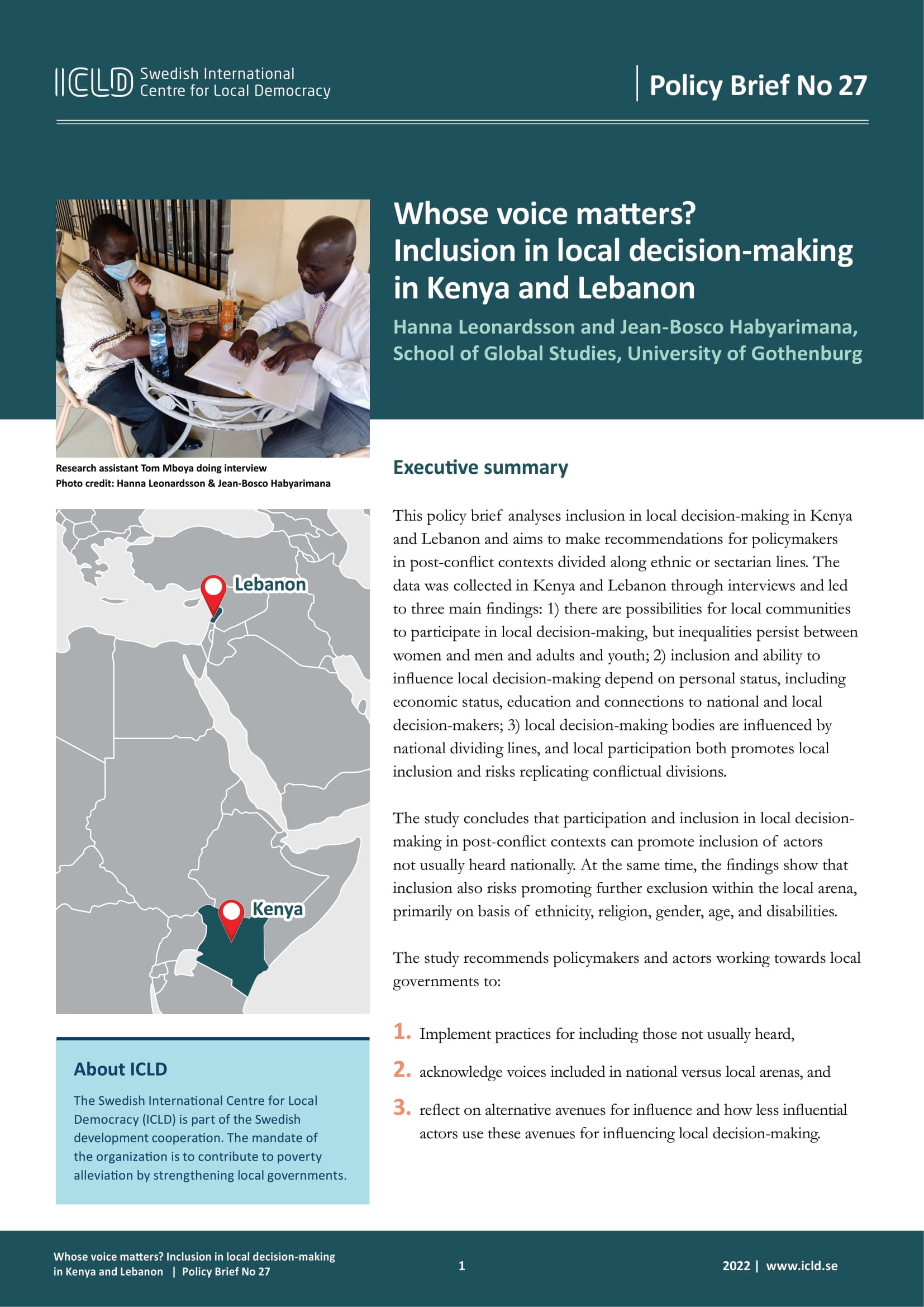
Research report: Whose voice matters? Inclusion in local decision-making in Kenya and Lebanon
This research report compares how local inclusion and participation is connected to citizen influence in two post-conflict societies. This report highlight the special circumstances in a society with experience of armed conflict and deep societal divides. While inclusion is crucial to local democracy, this research also shows the risk of perpetuating conflictual divides. It warns…

Whose voice matters? Inclusion in local decision-making in Kenya and Lebanon
This policy brief analyses how participation and inclusivity relates to influence in local decision-making in two post-conflict contexts. Peacebuilding increasingly overlaps with development research in the turn to a local level, bottom-up approach which puts emphasis on including all groups in society in decision-making. The authors find that inclusion and participation in local decision-making can…

Child Participation in the City of Vienna
With the UN Convention on the Rights of the Child as starting point, discussants are invited to use Vienna’s commitment to implement a child and youth strategy to reflect on how to build such a strategy that achieves meaningful child and youth participation. The Facilitator Guide introduces helpful concepts and tools: Lundy’s Model of Participation…
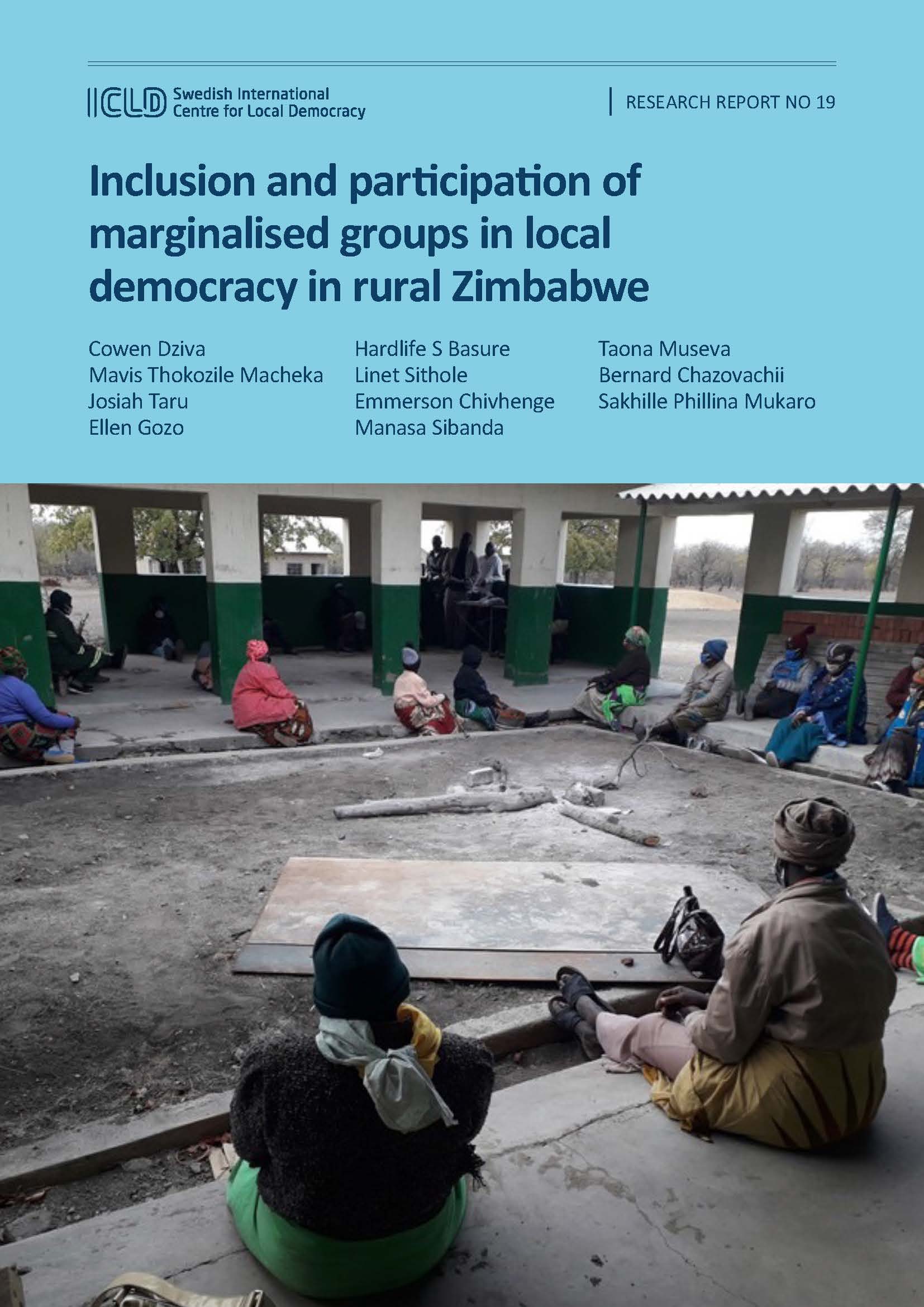
Inclusion and participation of marginalised groups in local democracy in rural Zimbabwe
This study on the extent of marginalised groups’ participation in local democracy in rural Zimbabwe adopts a mixed research approach: data were gathered through self-administered questionnaires, focus group discussions, key informant interviews and document review. Results show that varied mechanisms exist – including the national Constitution, policies, and institutional frameworks – that allow for the…

The Role of Social Norms in Reducing Corruption in Education: A Case Study of Schools in Hanoi-Vietnam
This research report presents empirical findings from an ethnographic study of the role of informal social norms in reducing corruption in public and private schools in Hanoi. The study begins by building a theoretical framework that inculcates the significance of local informal social norms in analysing/understanding corruption and designing counteraction strategies, especially at the sub-national…

From inclusion and transparency, to equity and quality: How can we improve local budget processes?
The objective of this project is to investigate how equitable, inclusive, transparent and accountable budget processes are at local government level and to propose measures for their improvement. The analysis included four pilot municipalities in North Macedonia, selected to represent different geographic locations and socio-economic characteristics. We employed different methods to assess the current state…

Problems of Public Participation in Urban Improvement Programmes: Cases of Petrozavodsk, Yekaterinburg and St Petersburg
As part of the LUPSRUSS³ -2 project, our team compared the implementation of the state-run ‘Creation of Comfortable Urban Environment’ programme in three Russian cities. Based on the analysis of regulatory documents, media and social network publications, surveys and interviews, we identified the main problems associated with public engagement in the formation of a comfortable…

Multi-Level Perspectives on Anti-Corruption: A Systematic Literature Review
This systematic literature review investigates the extent to which recent anti-corruption literature goes beyond the established paradigms (i.e., principal-agent perspective, macro-level, structural, and legal centralistic approaches) to focus on society’s informal norms, everyday micro-level power relations and non-monetary currencies (e.g. respect, prestige, social status and trust). By reconceptualising the various meanings and morality of informal,non-legal…

Overcoming Barriers to Participate in Local Democracy for People with Disabilities: The Case of Zimbabwe
This policy brief discusses barriers to the inclusion and participation of people with disabilities in local democracy in rural Zimbabwe and provides recommendations for enhanced participation. The analysis is part of a broader mixed research study on the inclusion and participation of vulnerable groups in Zimbabwe’s local democracy. Results of the study show how people…