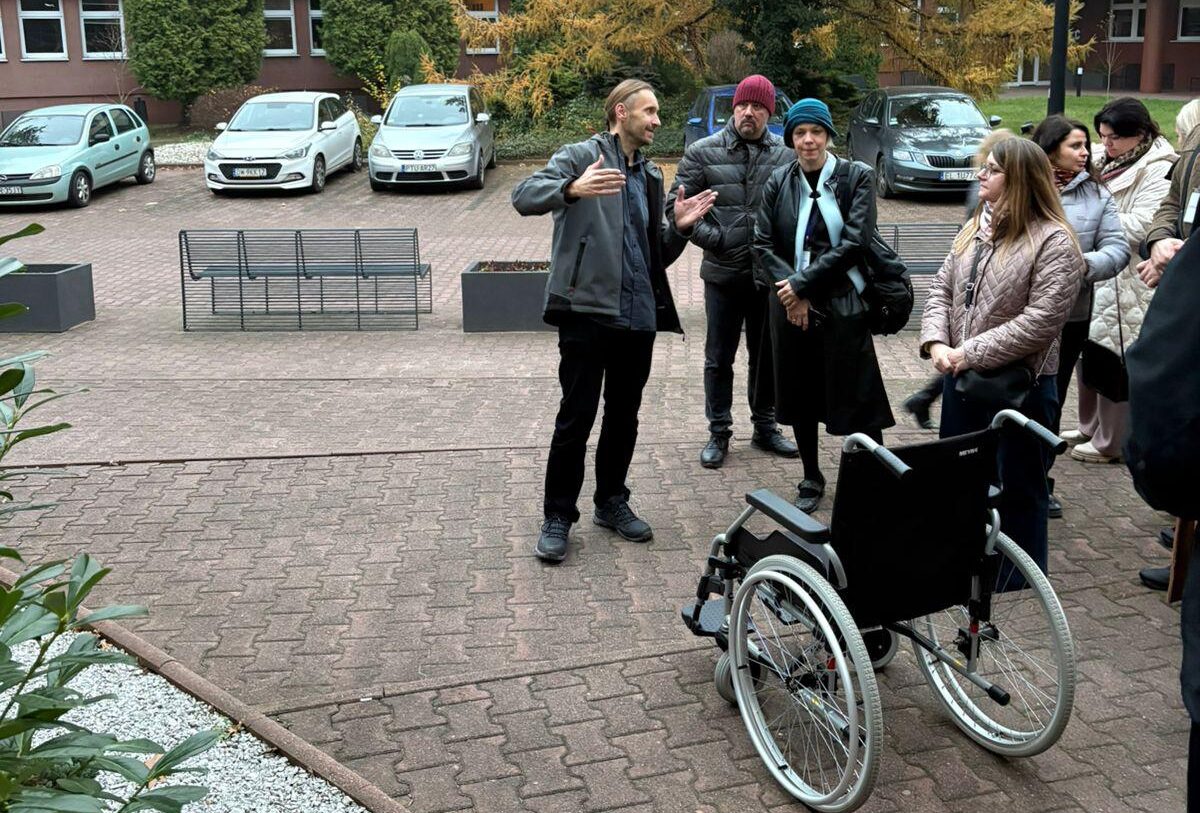
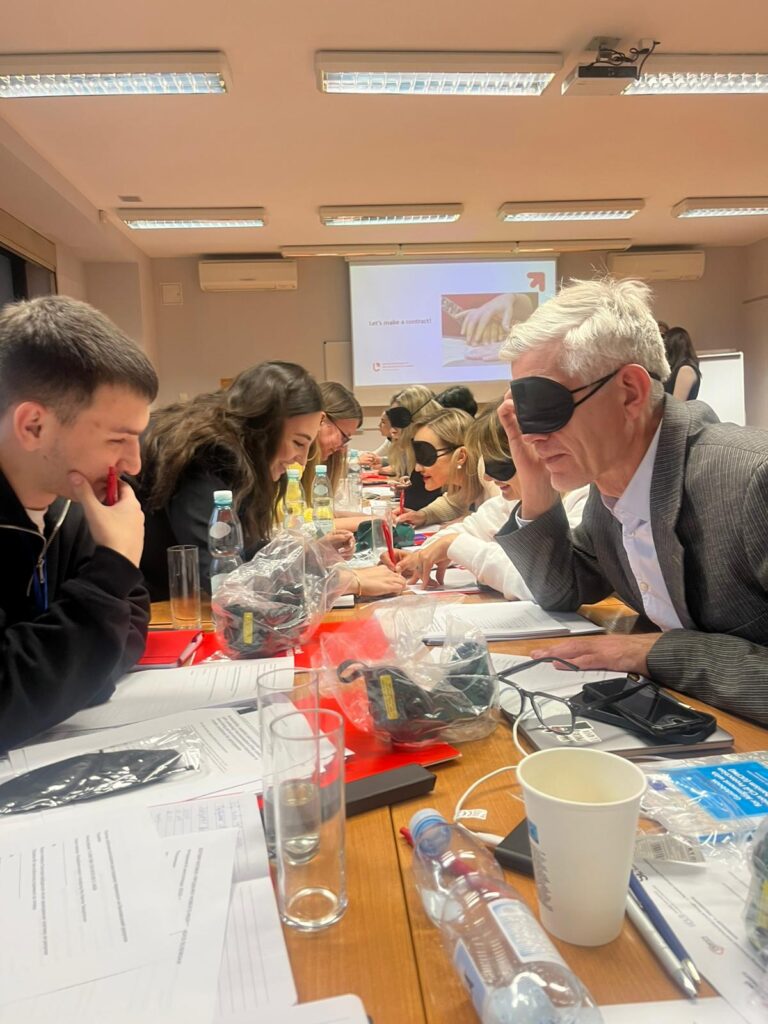
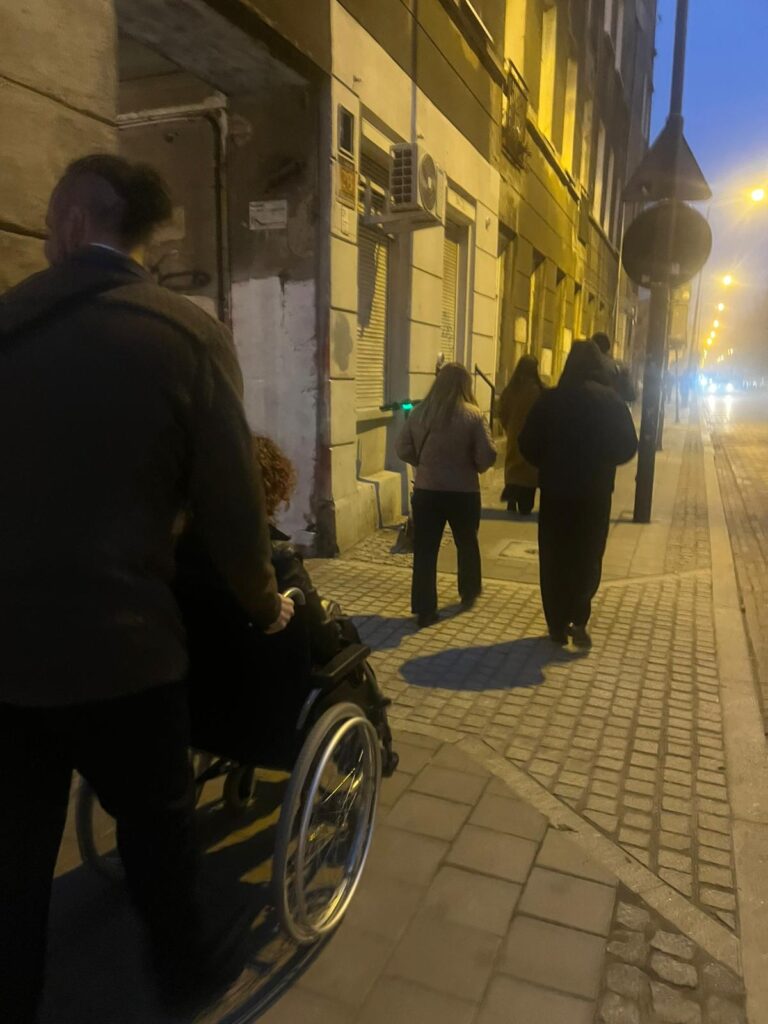
Zbigniew Głąb from University of Łódź leading an Accessibility Walk during the first BUILDSUP conference on 8-9 nov 2025. Photo: ICLD
As Ukrainian municipalities prepare for post-war reconstruction, accessibility and inclusion are becoming core concerns. The BUILDSUP project strengthens local capacity to plan and design cities that work for everyone, by introducing principles of universal design and sharing experiences between Sweden and Ukraine.
The war in Ukraine has uncountable consequences, including the increase of people living with disability. War veterans and civilians with physical and psychological trauma live under new circumstances. Municipalities are now preparing to embed accessibility from the start in Ukraine’s recovery and reconstruction.
BUILDSUP is a training for Ukrainian municipalities led by Malmö University, NGO Poruch and ICLD. It focuses on Universal Design, an approach in architecture to integrate a perspective of functional variations in the design of buildings and infrastructure, rather than accessibility solutions as add-ons that are both expensive and singling out the users.
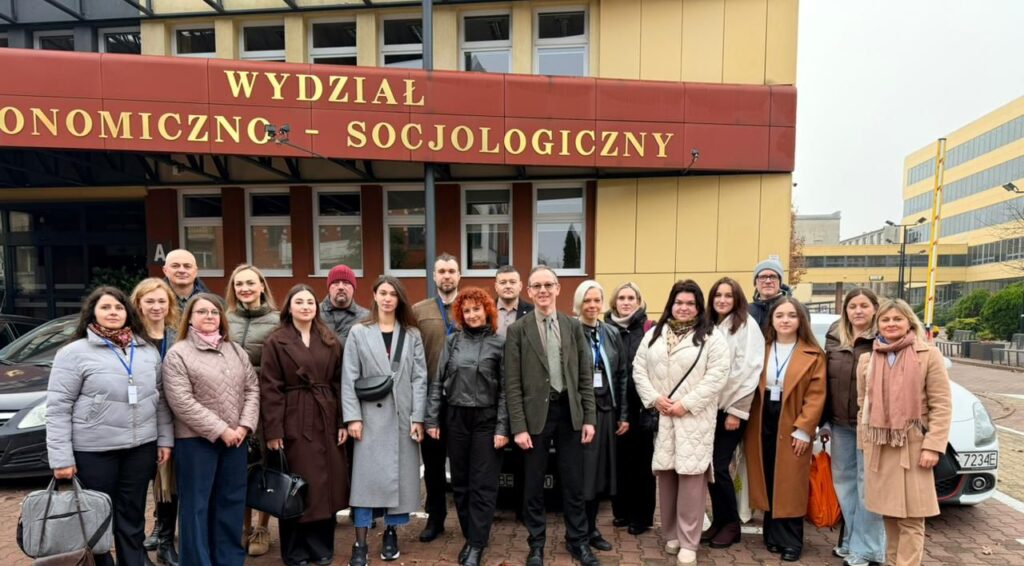
Participants of the BUILDS-UP project. Photo: ICLD
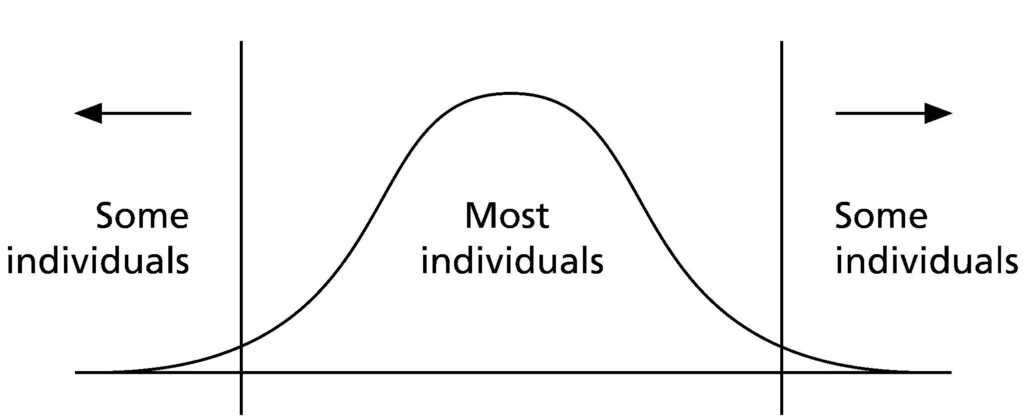
Universal design makes it functional for as many people as possible
Universal design aims to make the span as wide as possible. That means a building is functional for as many people as possible, with and without disabilities.
Adaptation of image from Hedvall, P. O., Ståhl, A., & Iwarsson, S. (2025). Accessibility, usability and universal design – still confusing? Harmonisation of key concepts describing person-environment interaction to create conditions for participation. Disability and Rehabilitation, 1–10. https://doi.org/10.1080/09638288.2025.2491831
After the war, returning citizens will need a city that accommodates the needs of war veterans, people with physical and psychological traumas, and a young generation expecting governance with European values. It must to reflect the views of youth, people with disabilities and other social groups.
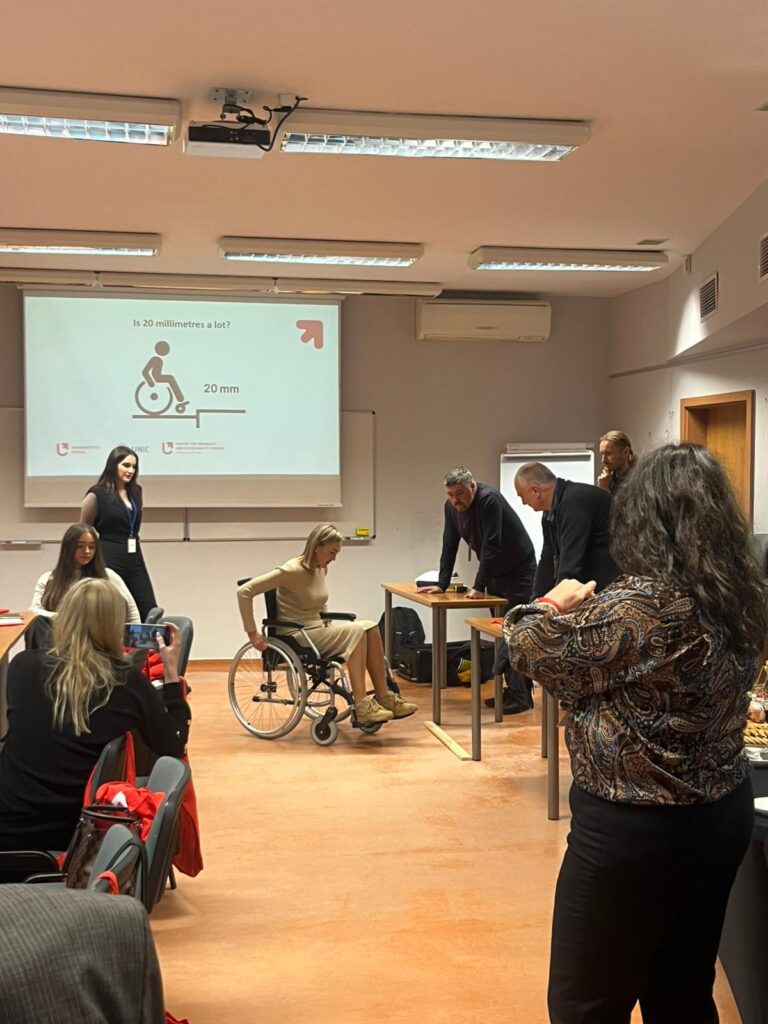
BUILDSUP mixes theory on universal design with practical experiments to see the world through another’s eyes. How does a 20 mm threshold feel in a wheelchair? How much extra time per day is spent on taking alternative routes to work for someone visually impaired? This is blended with comparisons of municipal governance in Ukraine and Sweden, and what it takes for a policy on inclusivity to be implemented in practice.
“We feel a responsibility to our community”
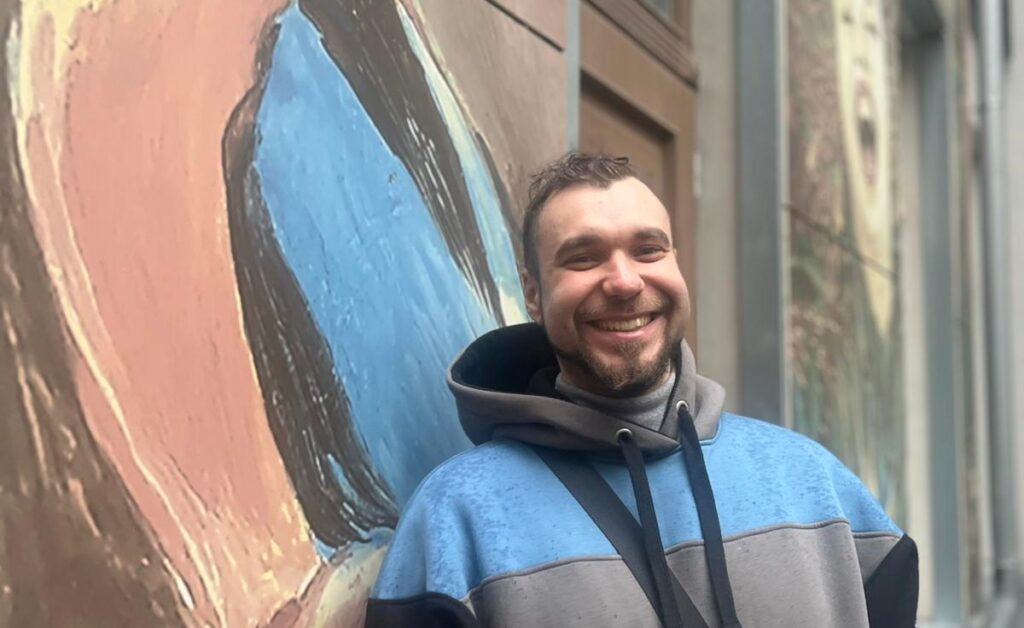
Kyrilo from Kherson, a frontline city under incessant attack, prepare for complete renovation once the war is over. They will need to restore nearly every building, street and public space. He describes how municipal staff are targeted because they uphold essential services and enable life to go on for the part of Khersons’s population that have not moved.
“Of course it can be frightening. But we feel a responsibility to our community. And after the war, we will have many veterans and people with disabilities, so we need solutions to rebuild the city in an inclusive way to bring them back.”
Kherson has a municipal partnership with Umeå focused on citizen participation in urban planning. Link to more info).
Kyrilo, a representative of Kherson. Photo: ICLD
Important networks
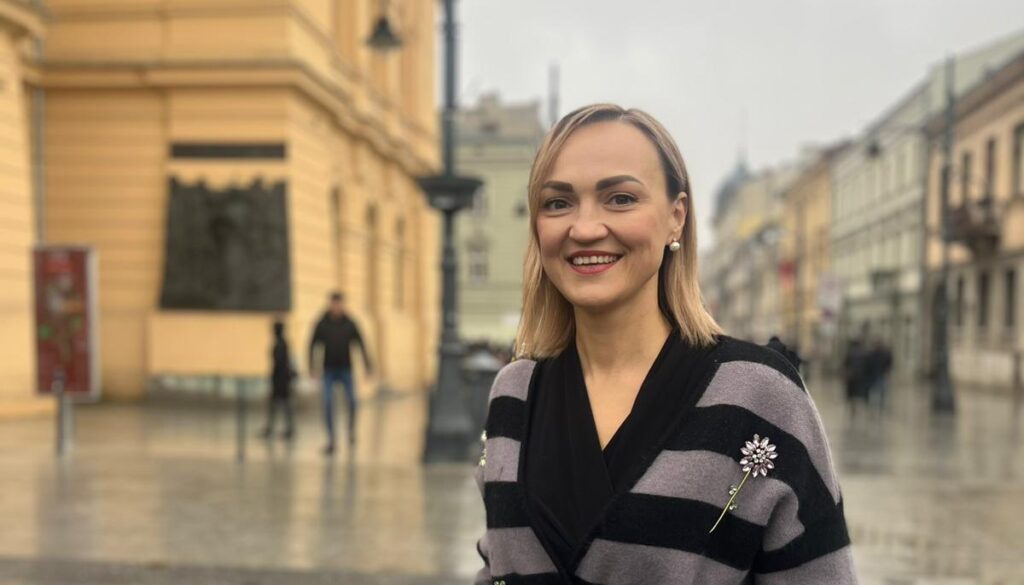
Hanna Davidenko is an alumna of ICLD’s Women’s Political Leadership programme 2016-2018. She now leads the Ukrainian chapter of the Women’s Democracy network, with over 1000 members. Also a rector of the Vinnytsia University and Councillor at Vinnytsia City Council, she leads with inclusivity and equity at the top of mind.
Hanna Davidenko is an alumnus of ICLD’s Women’s Political Leadership programme. Photo: ICLD
Her region is relatively safe and accommodates many displaced Ukrainians, but she frequently volunteers at the front. Mariia Tyschenko from the organizing NGO Poruch, and an ICLD mentor, insists on the importance of understanding how the situation differs across the country. The network these trainings give, between countries and across Ukraine, is an important complement to new knowledge and skills.
BUILDSUP is funded by the Swedish Institute. The first conference was hosted on behalf of the project by the University of Lodz Centre of Disability an Accessibility Studies.
Vi bjuder på kakor! Om du tycker det är ok, klickar du bara på "Acceptera alla". Du kan såklart välja vilken typ av kakor du vill ha genom att klicka på "Inställningar".
Read our cookie policy