


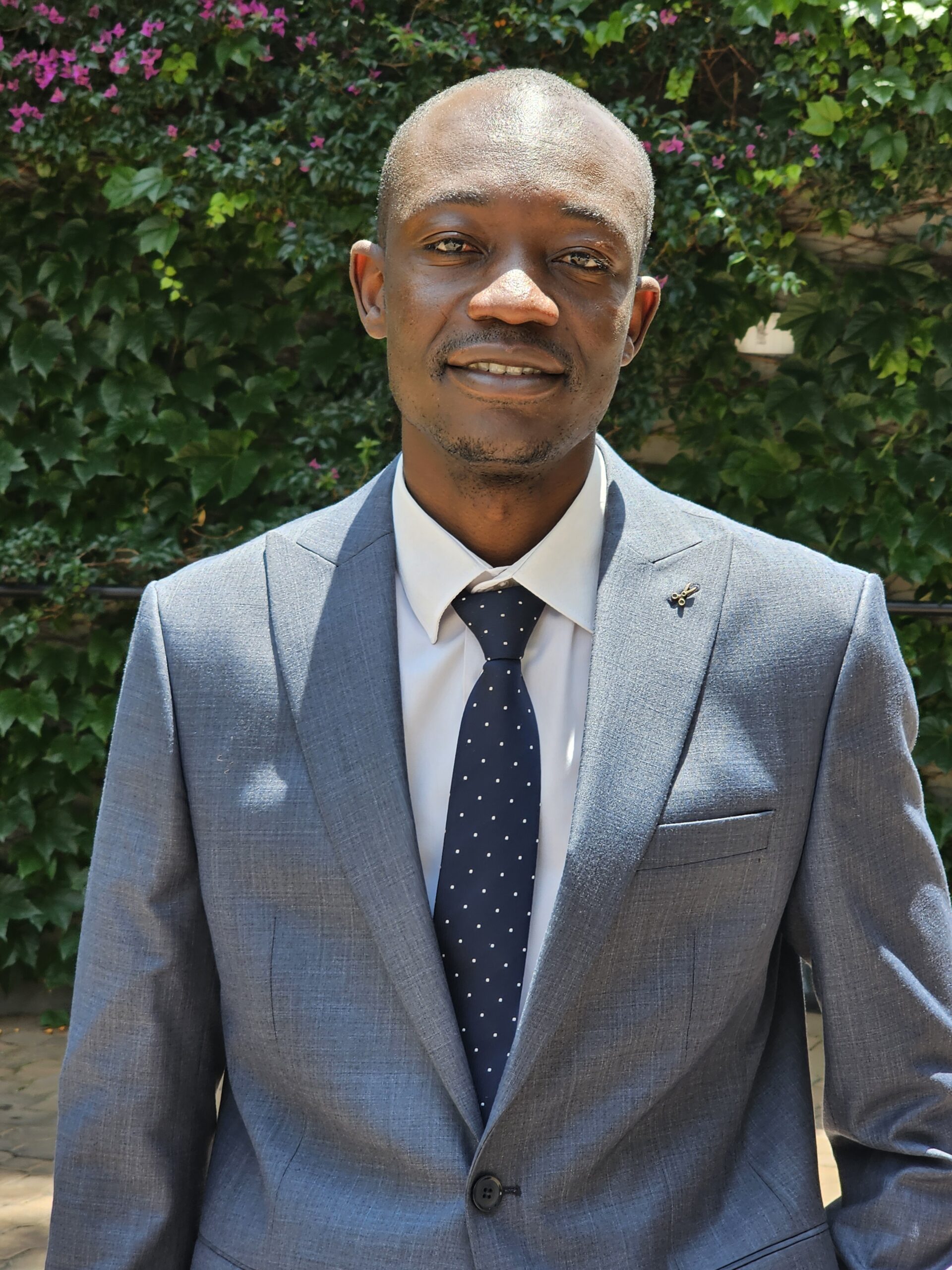
Name: Noel Israel Mushangwe
Country: Zimbabwe
How long have you been a mentor and How did you learn about ICLD?
I began my journey with ICLD in 2019 as a participant in the International Training Programme (ITP) on Leadership. The transformative experience, particularly its emphasis on rights-based local governance and inclusive participation, led me to implement several Projects of Change in Gokwe Town Council and later in the City of Mutare. Building on that foundation, I was appointed as an ICLD Consultant/Mentor in August 2023 to support a trilateral municipal partnership between Victoria Falls (Zimbabwe), Livingstone (Zambia), and Dorotea (Sweden), focusing on strengthening youth participation through human rights–based approaches.
Areas of Expertise:
Local Governance, Human Rights and Inclusion, Child/Youth Inclusion and Participation in Civic Affairs, Sustainable Development Goals (SDGs), Training/Mentoring, Monitoring and Evaluation (M&E).
Why did you become a mentor?
I became a mentor to close the learning loop, moving from being an ICLD learner to helping others drive change in their own communities. My participation in the ICLD International Training Programme (ITP) profoundly shaped my approach to governance, revealing the transformative power of locally rooted, rights-based leadership. Over the years, my work with civil society organisations and local authorities, combined with my roles as a researcher and a passionate development practitioner, has deepened my understanding of inclusive local democracy, from child participation and disability inclusion to SDG localisation and policy reform. I believe these hard-earned lessons are most valuable when shared. That’s why I wanted to pay my experience forward: to support other municipalities in embedding genuine inclusion, amplifying youth voices, and translating global commitments like the SDGs into concrete, locally owned action.
Why do you like to mentor?
I like mentoring because it’s a direct way to scale the impact of truly transformative ideas. I find it deeply rewarding, both professionally and personally, to foster mutual growth, build trust, and empower local leaders to drive sustainable change by guiding teams to reflect critically, co-create solutions, and implement inclusive policies rooted in their own contexts.
What are the success factors for building dynamic, inclusive and professional mentoring culture?
Building a dynamic, inclusive, and professional mentoring culture hinges on several interconnected success factors. At its core is trust and mutual respect, the foundation that enables honest dialogue, vulnerability, and shared commitment between mentor and mentee. This must be paired with active listening and deep contextual understanding, ensuring that guidance is grounded in the mentee’s realities rather than external assumptions. Crucially, mentoring should be approached as co-learning, where both parties’ exchange knowledge and insights, moving away from hierarchical or top-down instruction toward collaborative problem-solving.
What is the most challenging thing while being a mentor?
The biggest challenge is sustaining momentum when structural barriers, such as limited resources, political shifts, or rigid bureaucratic systems, slow progress. Supporting teams to stay committed to inclusive principles amid these constraints requires patience, creativity, and long-term accompaniment. It’s also challenging, but vital, to help institutions move beyond token youth participation toward genuine co-decision-making.
What is your passion in life?
My passion as a Development Practioner is advancing inclusive local governance that centers the voices of young people, marginalized groups, and vulnerable communities. I believe local governments are powerful engines for human rights realization and sustainable development and I am committed to strengthening their ability to serve all citizens with dignity, equity, and accountability.