Inclusive leadership and governance

Haparanda and Solwezi – Zambia
Empowering of women and youth in local democracy and development work Haparanda and Solwezi are carrying out this Inception to have the opportunity to jointly develop a project plan closely linked to issues of inequality and empowering of women. The partners intend to find strengthening approaches to improve developmental inequalities through equitable service delivery without…

Valdemarsvik, Palapye and Central district – Botswana
Ensuring youth participation The two municipalities cooperating with the district level in Botswana, though the involvement of Central district in the partnership, are committed to achieving Agenda 2030 through a rightsbased approach and aim to work more systematically with human rights at a local level. At this stage both partners have established a mutual challenge…

Incorporating immigrant voices? Formal access to participatory mechanisms in the city of Barcelona
Democratic innovations to enhance the participation of city-zens in urban settings have advanced in the world in the last decades. Avenues such as citizens’ assemblies, deliberative polls, participatory budgeting, e-petitions and online consultations have become part of the repertoire of participation available to urban residents. However, a pending question is whether local authorities envision specific…
Closing or keeping open public schools during COVID-19 in Serbia: finding the middle way
This policy brief offers a practical, feasible action plan for how to preserve and enhance the provision of public education in deprived suburban neighbourhoods during a pandemic. Based on critical insights collected in the past year at the urban periphery of Belgrade (Serbia), the brief suggests a shift in perceiving public schools in deprived suburban…

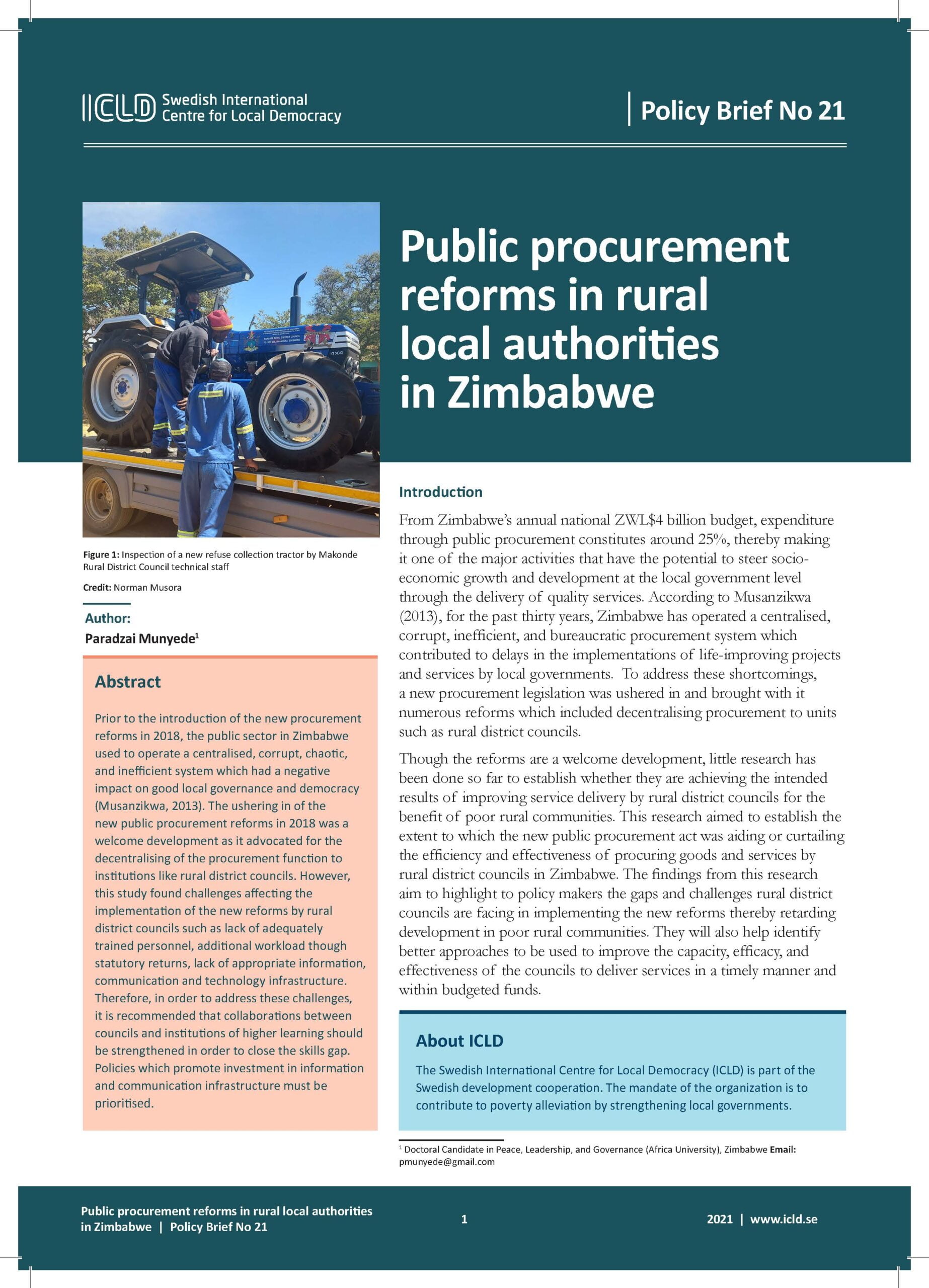
Public procurement reforms in rural local authorities in Zimbabwe
Prior to the introduction of the new procurement reforms in 2018, the public sector in Zimbabwe operated a centralised, corrupt, chaotic, and inefficient system which had a negative impact on good local governance and democracy. The ushering in of the new public procurement reforms in 2018 was a welcome development as it advocated for the…

How to plan for inclusive and sustainable urban transport: a toolbox to conduct a safety audit
Creating inclusive, safe and affordable transport for all is one of the targets of Sustainable Development Goal 11. It requires paying attention to the needs of vulnerable groups such as women, children, persons with disabilities and older persons. To achieve this goal, local governments need to understand the way vulnerable groups experience public transport on…

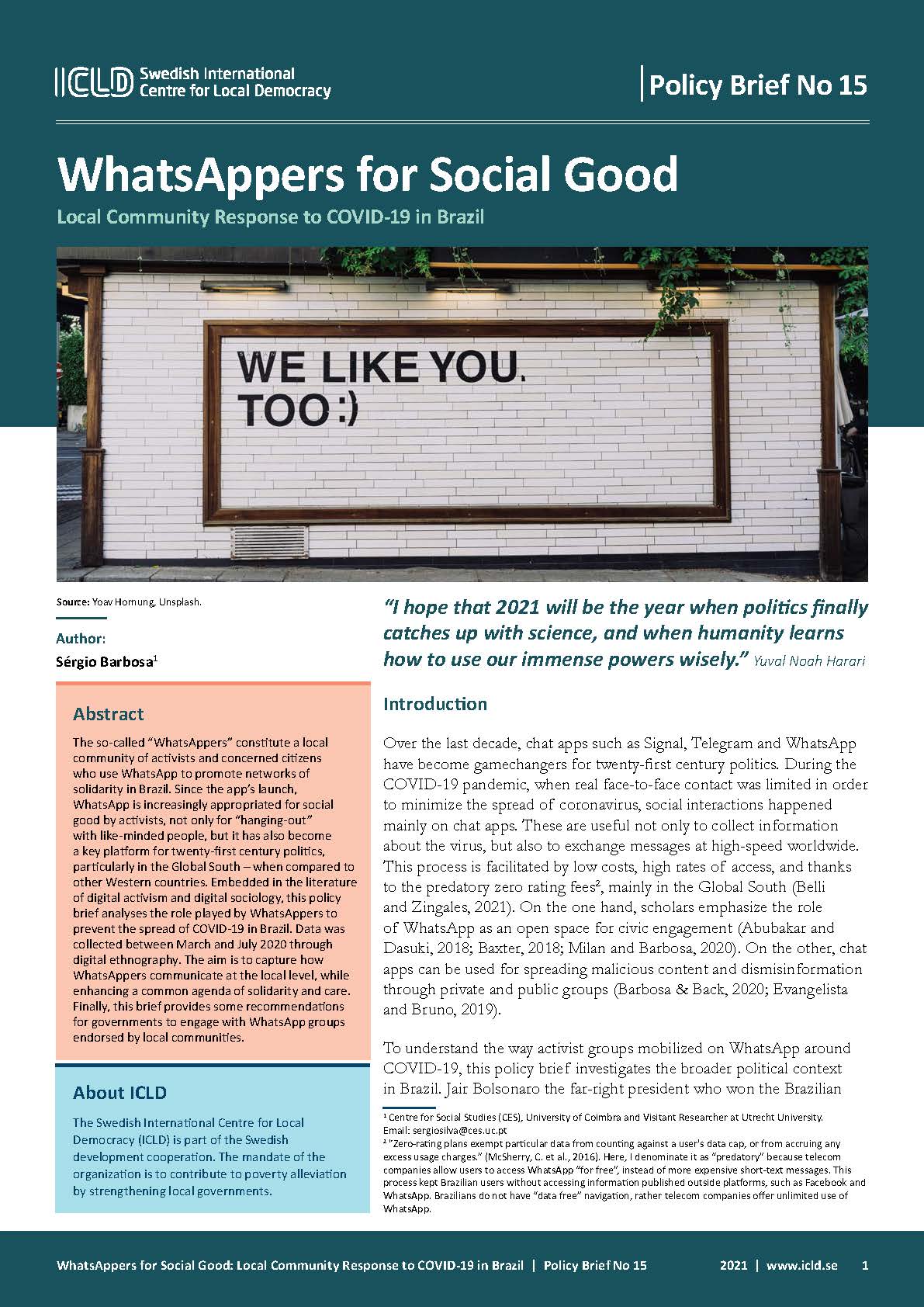
WhatsAppers for Social Good: Local Community Response to Covid-19 in Brazil
The so-called “WhatsAppers” constitute a local community of activists and concerned citizens who use WhatsApp to promote networks of solidarity in Brazil. Since the app’s launch,WhatsApp is increasingly appropriated for social good by activists, not only for “hanging-out” with like-minded people, but it has also become a key platform for twenty-first century politics, particularly in…
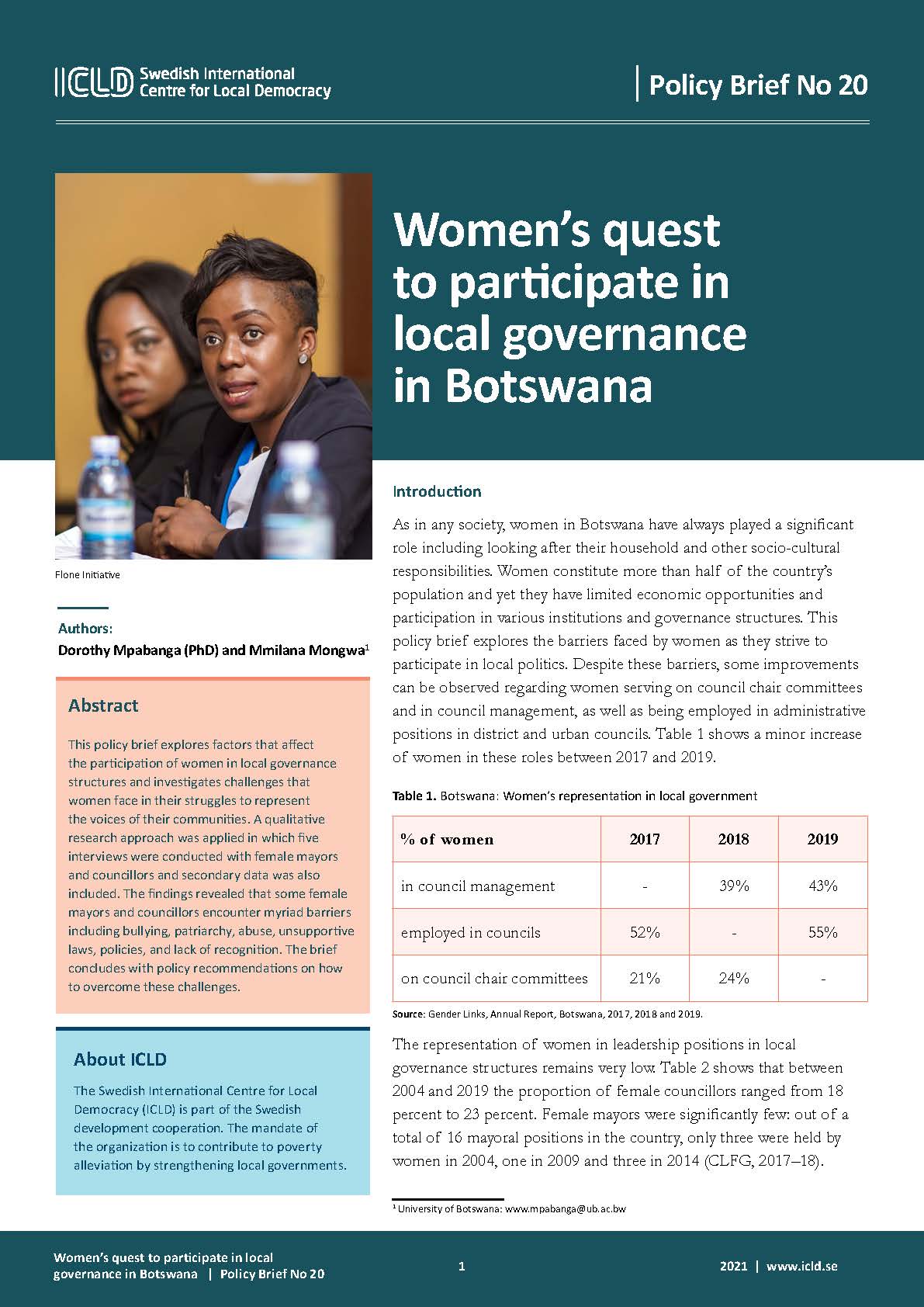
Women’s quest to participate in local governance in Botswana
This policy brief explores factors that affect the participation of women in local governance structures and investigates challenges that women face in their struggles to represent the voices of their communities. A qualitative research approach was applied in which five interviews were conducted with female mayors and councillors and secondary data was also included. The…